
Make Every PTO Day
Easier to Manage
Maintain every employee's paid time off in an organized way, with clear PTO balances, requests, approvals, and time-off records, offering HR teams and managers better visibility into employee availability.

From PTO Requests to Clear Balances
The PTO Tracking Service of HRCRM combines employee time-off balances with requests, approvals, policies, and usage information, enabling employees to understand their available PTO while giving HR and managers a clearer view of planned absences.
Where Manual PTO Management Falls Short
PTO Balances Become Unclear
Without proper tracking, employees and managers may struggle to know how much paid time off is available.
Requests Get Scattered
PTO requests can become difficult to track if they are handled through emails, messages, or separate records.
Time-Off Usage Goes Unnoticed
HR Teams may find it harder to understand how PTO is being used without organized records.
Approvals Keep Waiting
Delays in decisions can also make it difficult for employees and managers to plan any upcoming time off.
Policies Create Confusion
Different PTO rules, entitlements, and eligibility requirements can be difficult to manage consistently.
Team Availability Gets Affected
Multiple Employees taking time off around the same period can create unexpected workforce gaps.
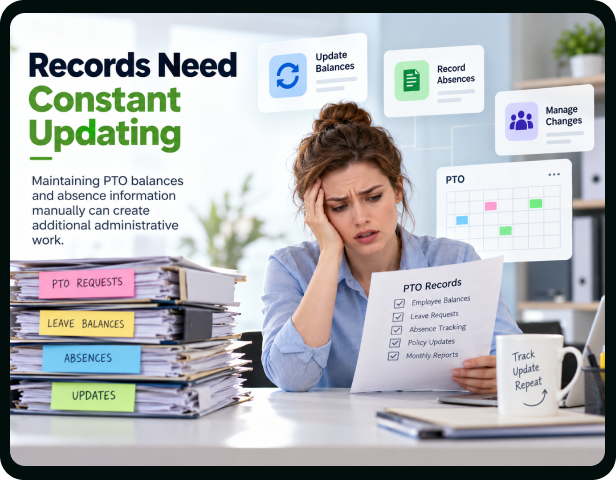
Records Need Constant Updating
Maintaining PTO balances and absence information manually can create additional administrative work.
Planning Becomes Reactive
Without clear PTO visibility, managers may have less time to prepare for upcoming employee absences.







Make Every PTO Record Easier
to Manage
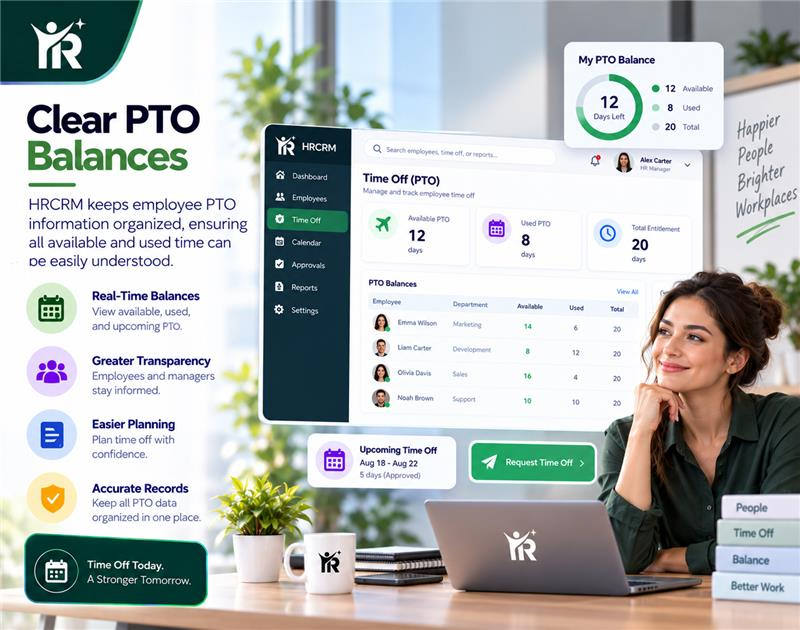
Clear PTO Balances
HRCRM keeps employee PTO information organized, ensuring all available and used time can be easily understood.
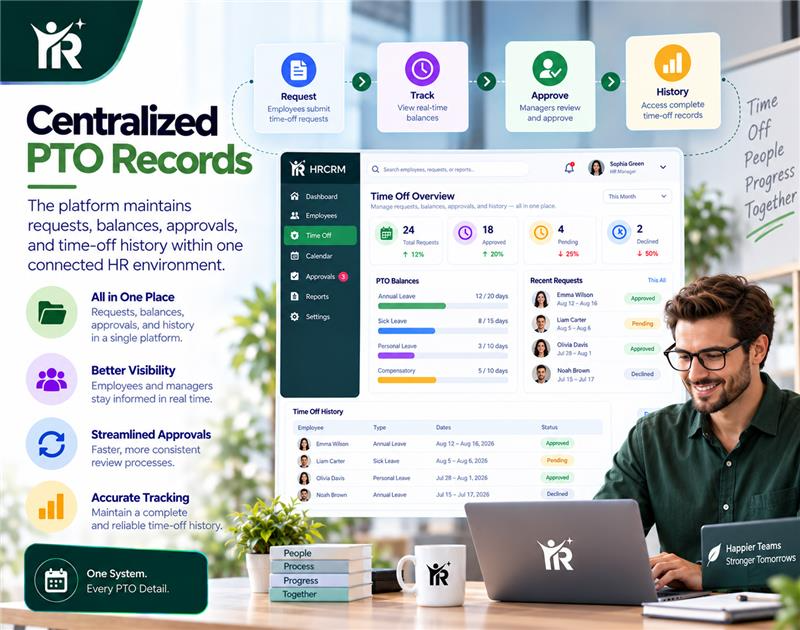
Centralized PTO Records
The platform maintains requests, balances, approvals, and time-off history within one connected HR environment.
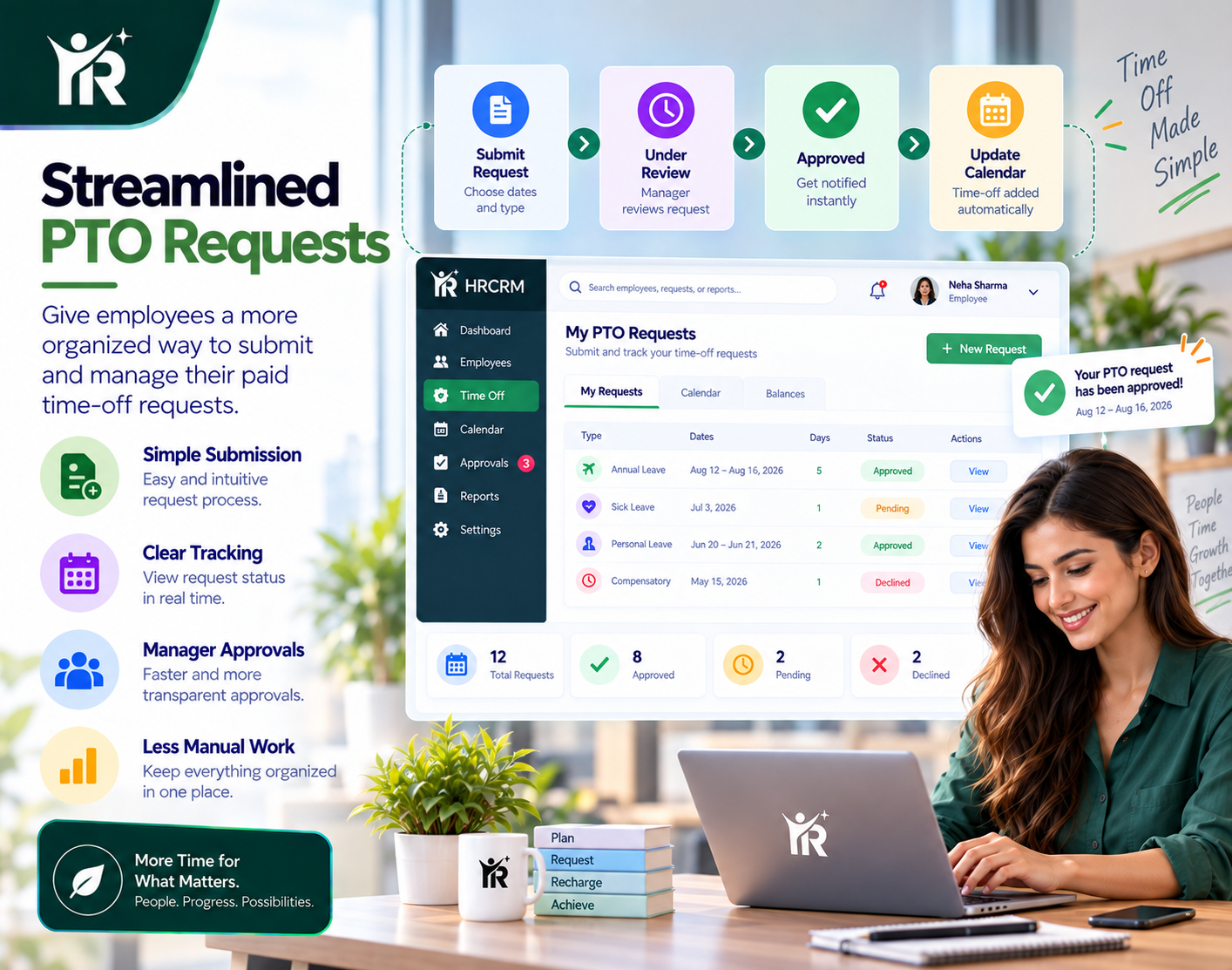
Streamlined PTO Requests
Give employees a more organized way to submit and manage their paid time-off requests.
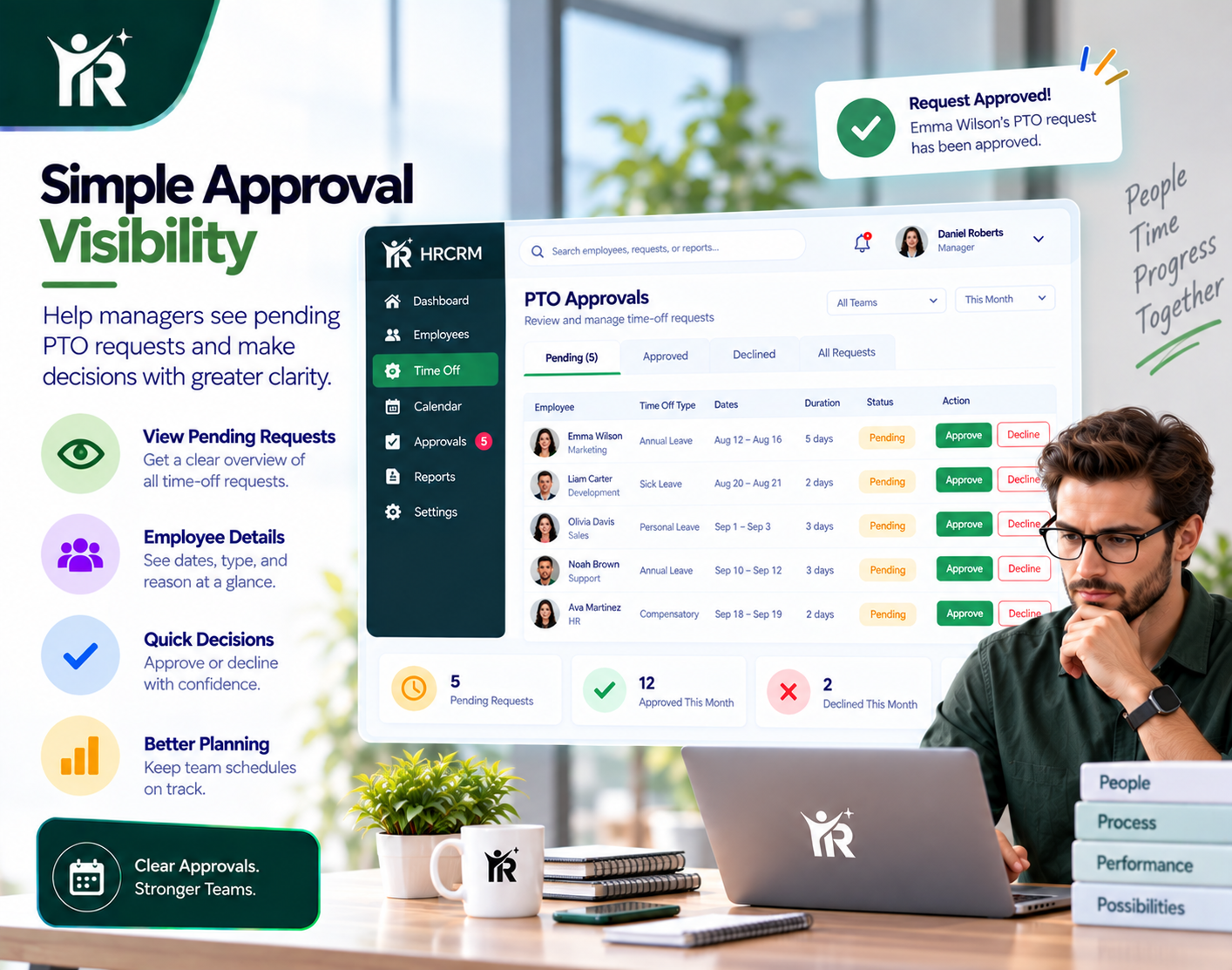
Simple Approval Visibility
Help managers see pending PTO requests and make decisions with greater clarity.
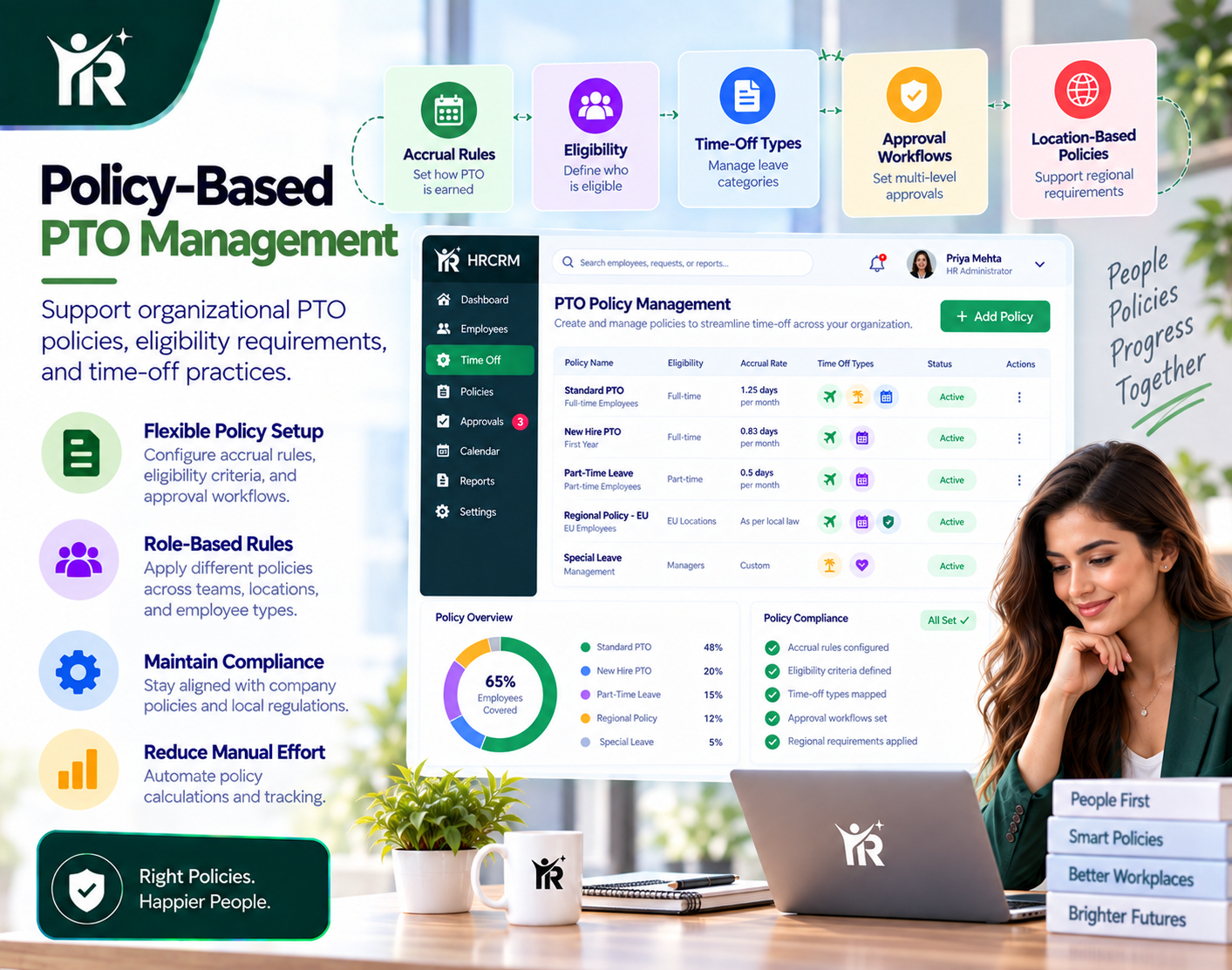
Policy-Based PTO Management
Support organizational PTO policies, eligibility requirements, and time-off practices.
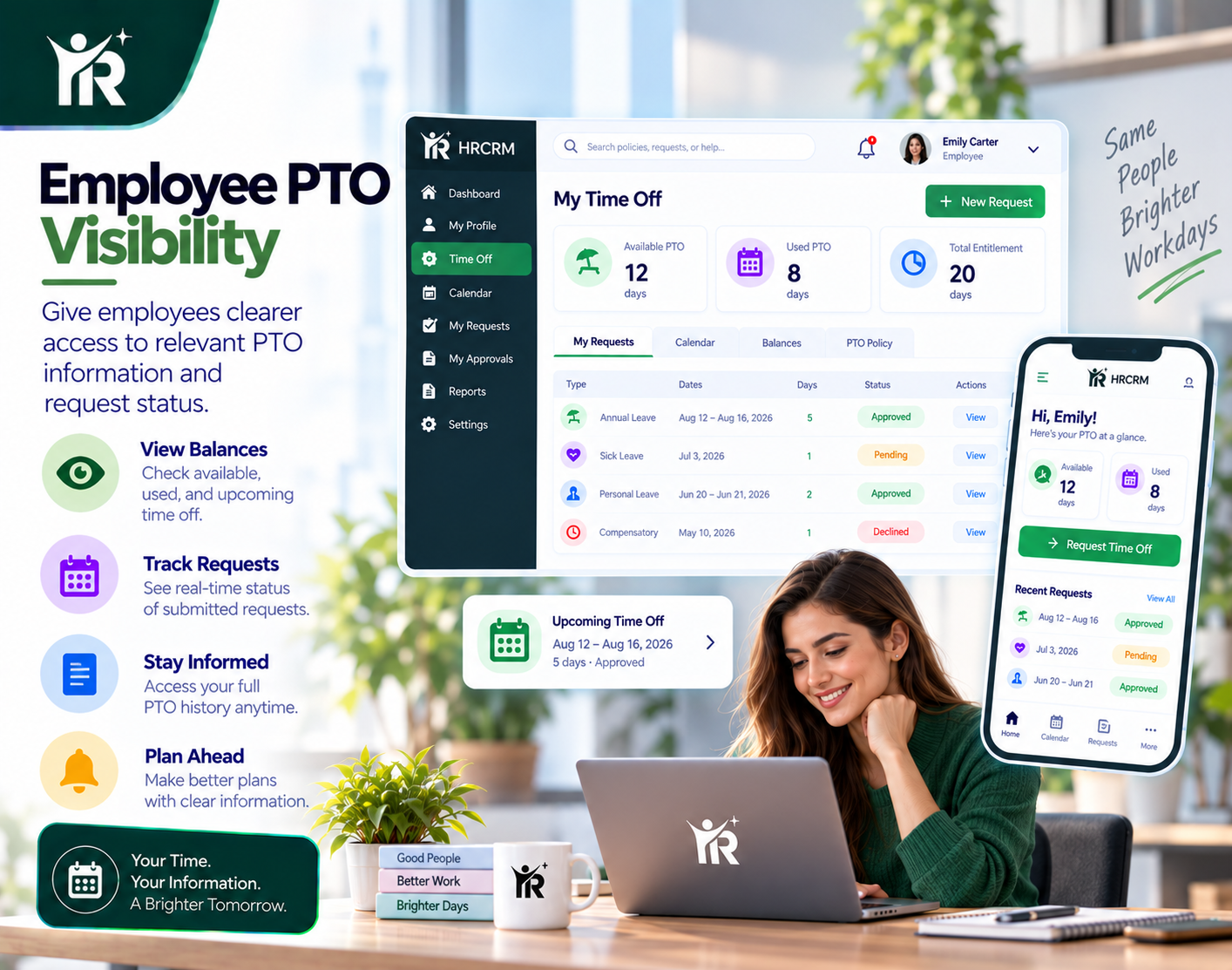
Employee PTO Visibility
Give employees clearer access to relevant PTO information and request status.
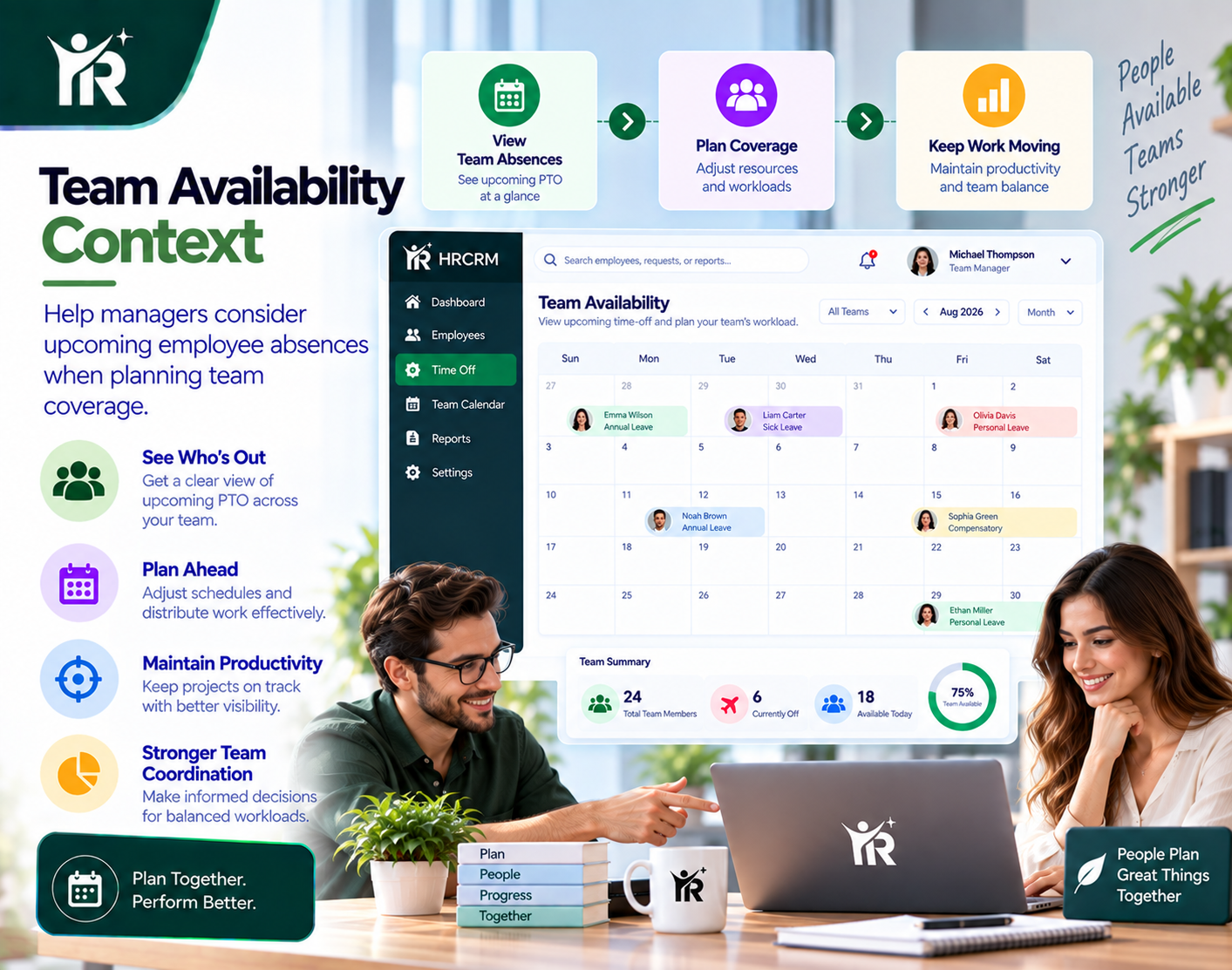
Team Availability Context
Help managers consider upcoming employee absences when planning team coverage.
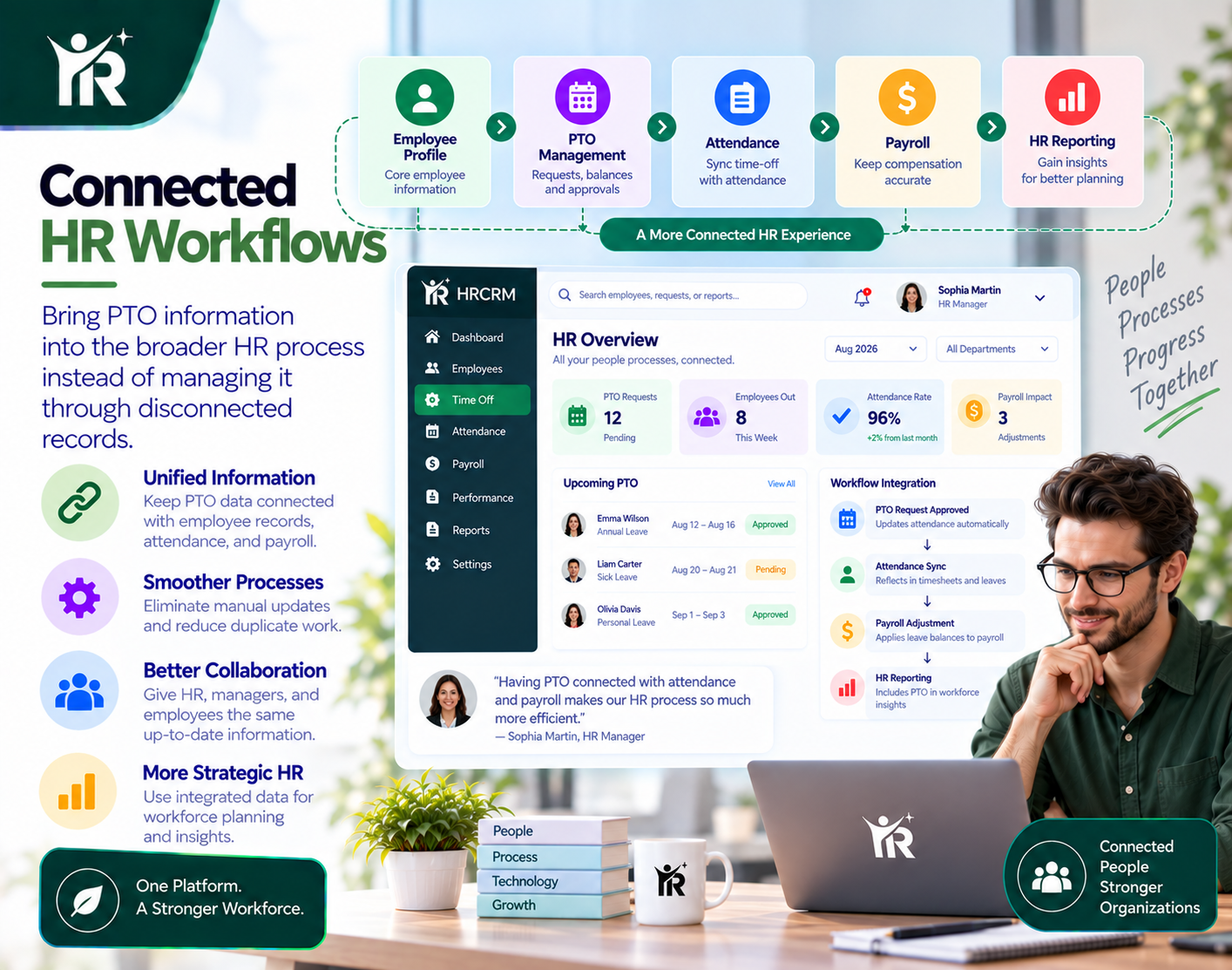
Connected HR Workflows
Bring PTO information into the broader HR process instead of managing it through disconnected records.
From Time-Off Visibility to Better Planning
Reduce administrative effort spent maintaining PTO records.
Improve visibility into employee PTO balances and usage.
Minimize confusion around available paid time off.
Support more consistent PTO administration across teams.
Improve workforce planning around upcoming employee absences.
Reduce disruptions caused by unexpected time-off overlaps.
Give employees greater confidence in their PTO information.
Maintain more organized time-off records for HR teams.
A Clearer Route Through Every PTO Request
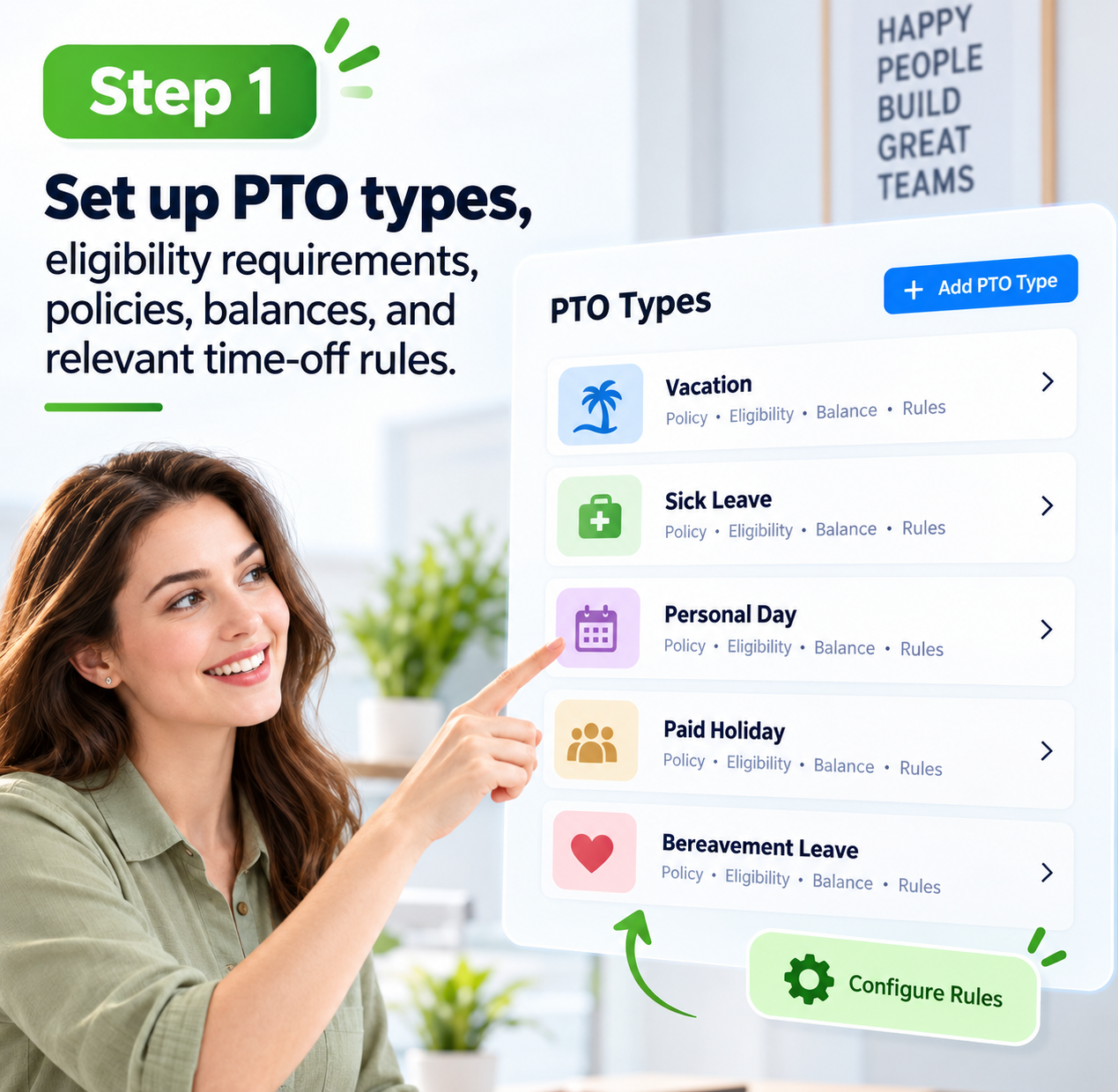
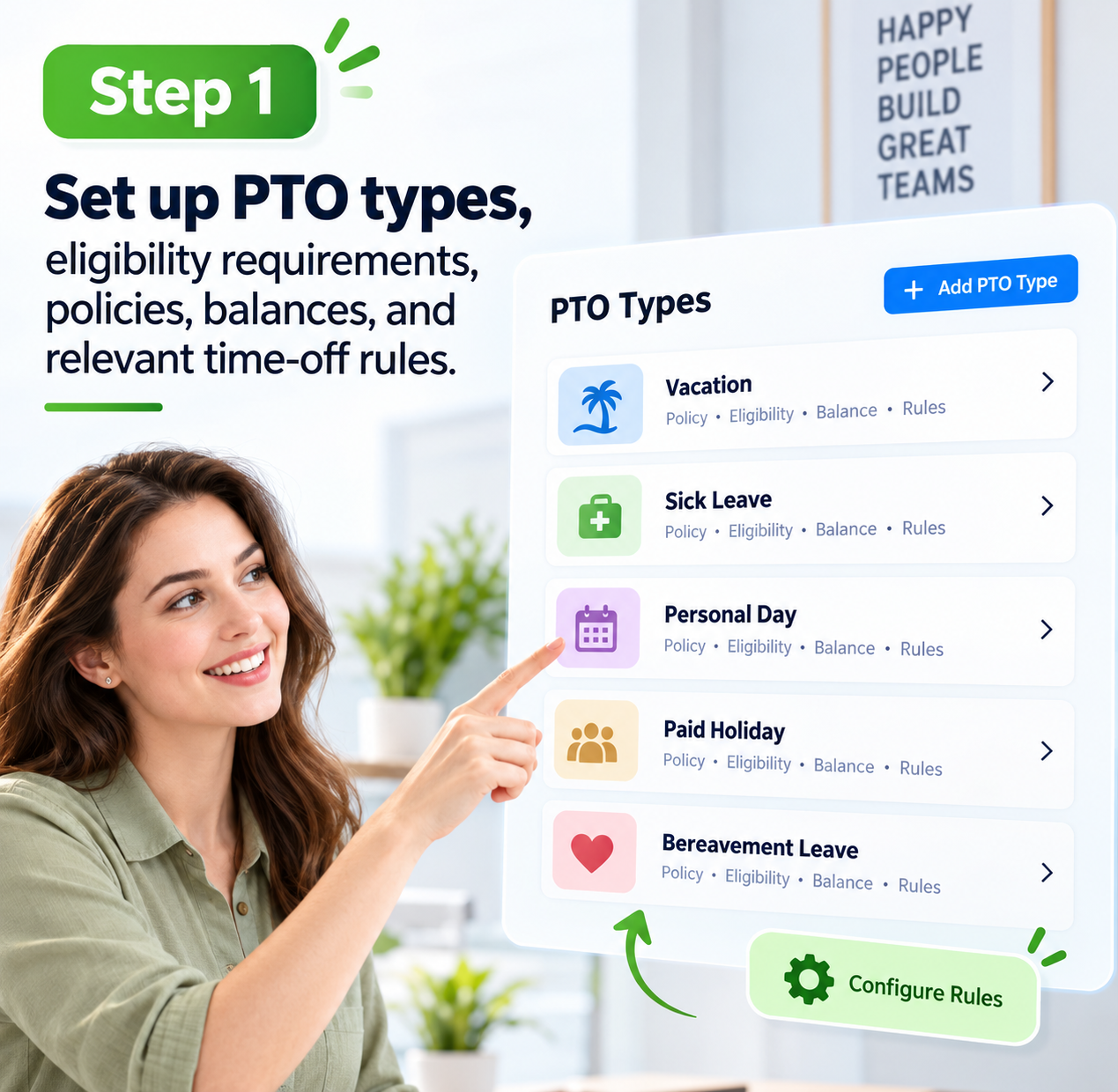
Step 1
Set up PTO types, eligibility requirements, policies, balances, and relevant time-off rules.
Step 2
Employees submit PTO requests with the required dates and time-off information.
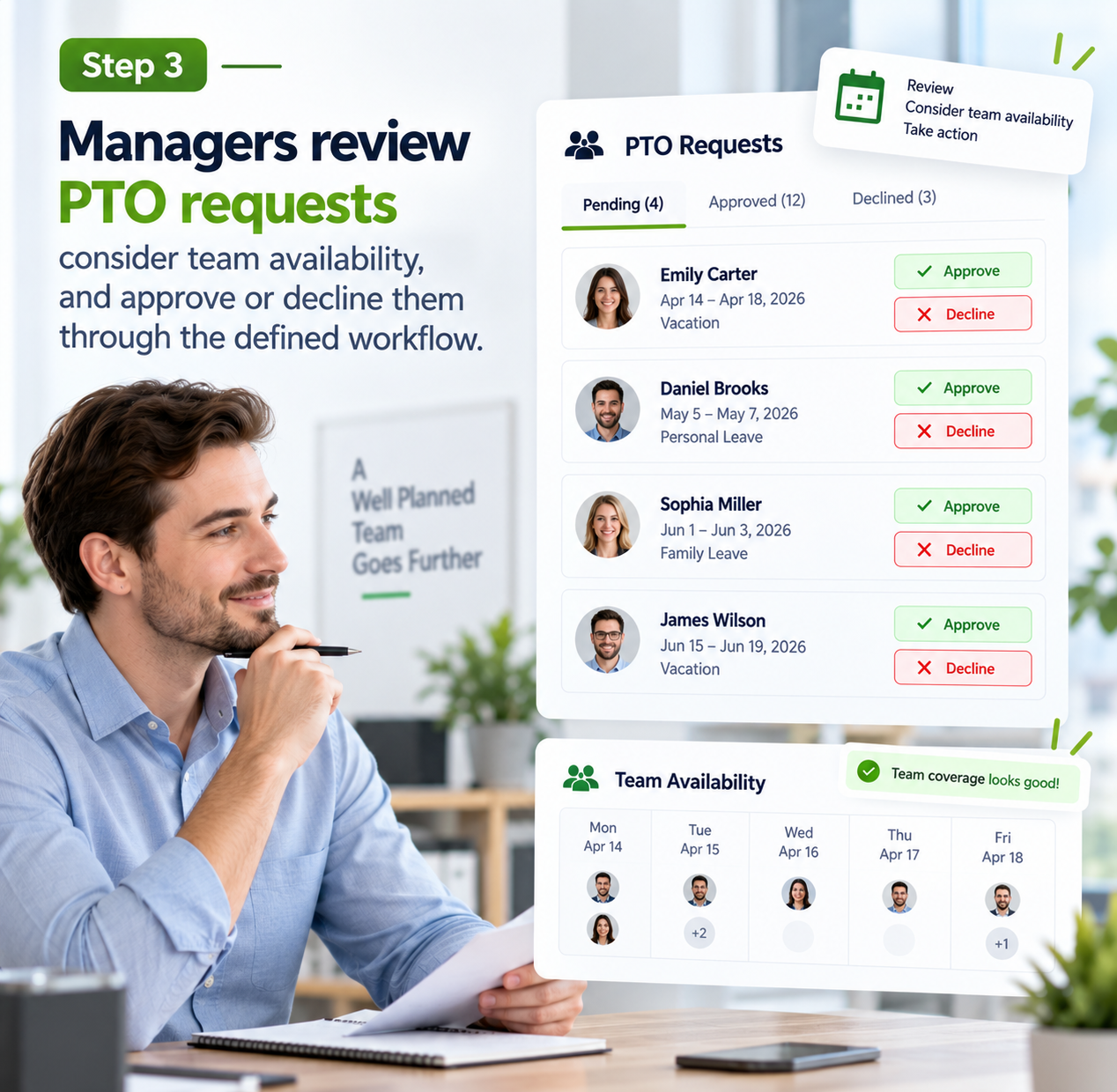
Step 3
Managers review requests, consider team availability, and approve or decline them through the defined workflow.
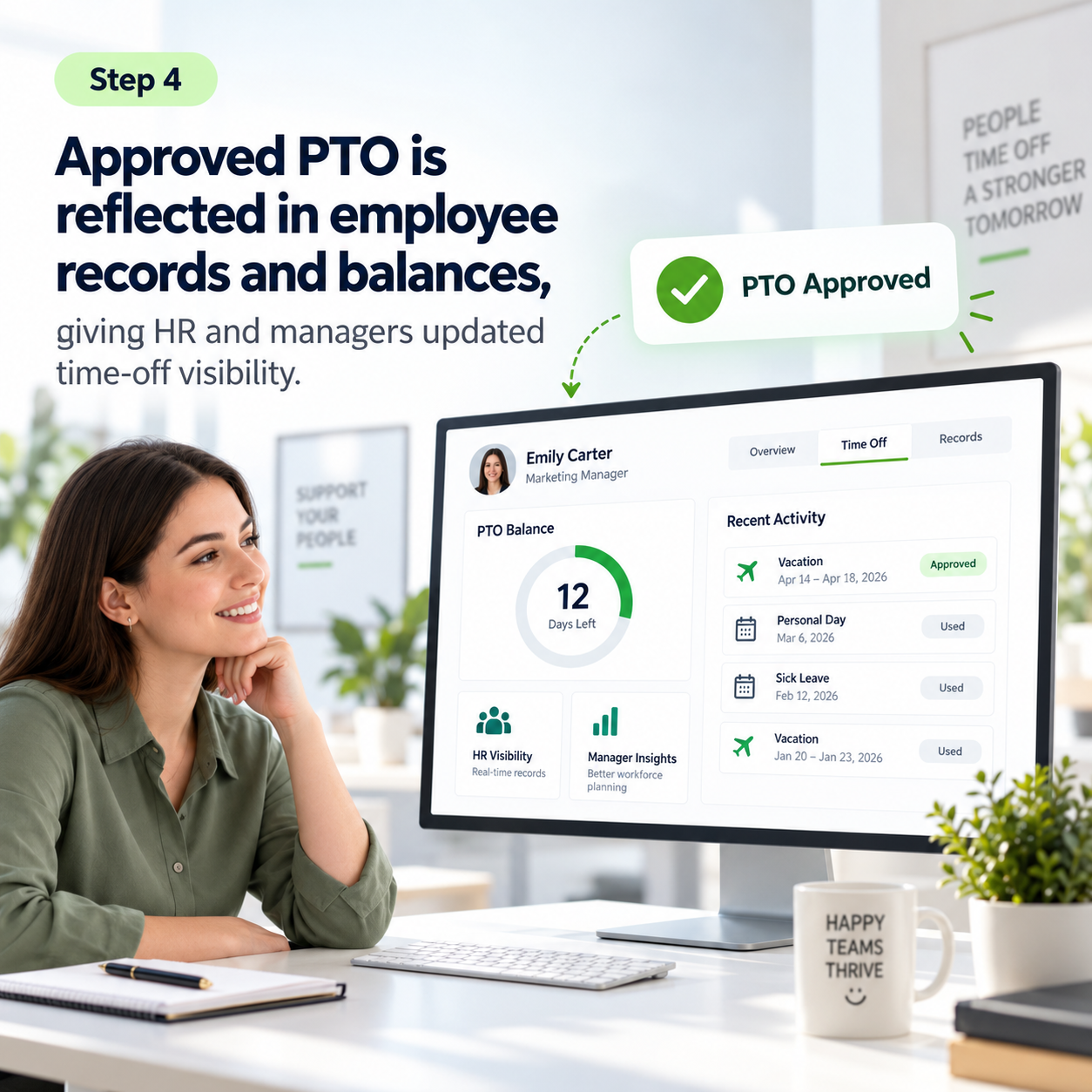
Step 4
Approved PTO is reflected in employee records and balances, giving HR and managers updated time-off visibility.
For Teams Where PTO Planning Matters
Growing Businesses
Maintain organized PTO records as employee numbers and time-off requirements expand.
Startups
Give growing teams a straightforward way to manage paid time off without scattered records.
Healthcare Organizations
Support PTO visibility across teams with varied schedules and workforce requirements.
Manufacturing Businesses
Help manage employee time off across operational teams and changing workforce schedules.
Retail Businesses
Maintain PTO visibility across stores, branches, and different employee groups.
IT & Software Companies
Support PTO tracking for flexible teams working across modern workplace arrangements.
Professional Services
Help managers plan around employee PTO while maintaining visibility across project teams.
Educational Institutions
Organize employee time-off information across departments and workforce groups
Large Enterprises
Create a more consistent approach to PTO tracking across departments, teams, and locations.
Give Your Team a Better Way to Track PTO
Centralize employee management, automate everyday HR processes, and empower your team with a secure, scalable platform designed for business growth.
Frequently Asked Questions
How does PTO tracking benefit HR teams?
PTO tracking offers HR teams clearer visibility into employee balances, requests, usage, and upcoming absences, while reducing administrative work.
Can employees submit PTO requests through HRCRM?
Yes. Employees can submit PTO requests with relevant dates and information through an organized time-off workflow.
How does PTO tracking help workforce planning?
PTO tracking helps workforce planning by offering managers earlier visibility into planned employee absences.
Is PTO tracking useful for remote teams?
Yes, PTO tracking is useful for remote teams. Centralized PTO information can support consistent time-off management for remote, hybrid, distributed, and office-based employees.