
Performance Starts with
Better Conversations
Make One-on-One Meetings more meaningful with structured conversations, consistent follow-ups, employee feedback, and performance discussions that help managers and employees stay aligned.

The Space Where Better Performance Begins
One-on-One Meetings give managers and employees a dedicated space to discuss progress, expectations, challenges, feedback, and development. HRCRM brings structure to these conversations so important discussions lead to meaningful follow-through.
When Important Conversations Get Lost in the Workday
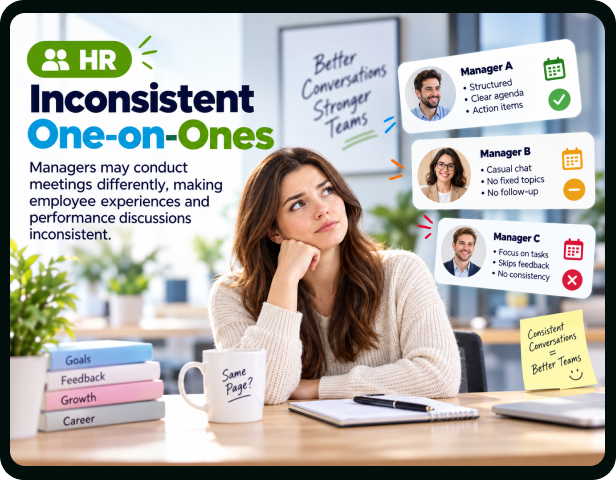
Inconsistent One-on-Ones
Managers may conduct meetings differently, making employee experiences and performance discussions inconsistent.
Conversations Without Follow-Up
Important points discussed during meetings can disappear when actions and commitments aren't properly tracked.
Limited Manager Visibility
Leaders may struggle to understand recurring employee concerns, development needs, or performance barriers.
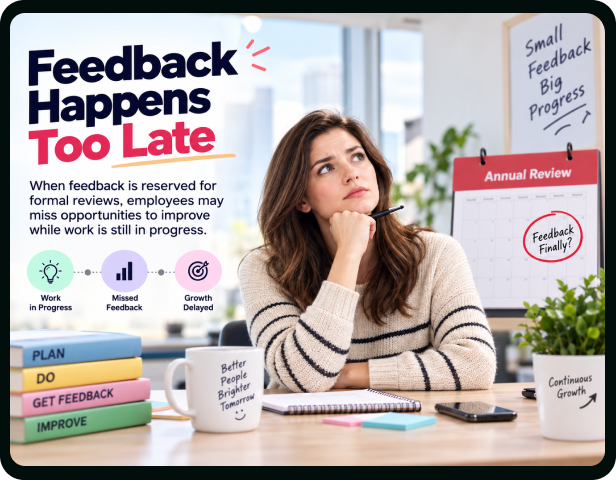
Feedback Happens Too Late
When feedback is reserved for formal reviews, employees may miss opportunities to improve while work is still in progress.
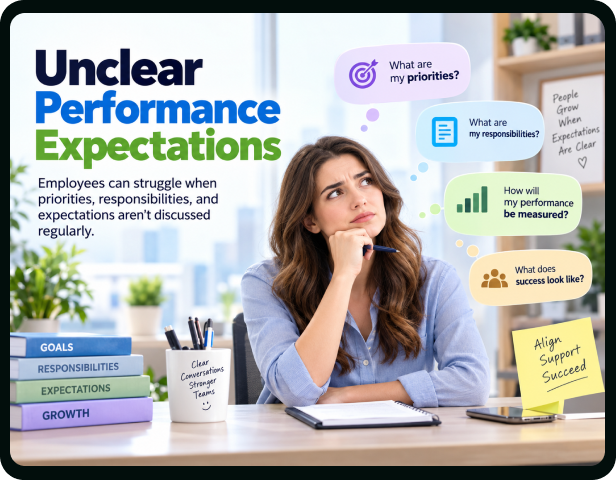
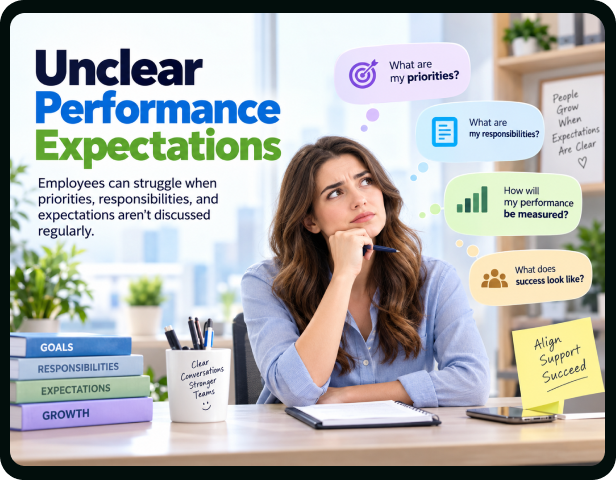
Unclear Performance Expectations
Employees can struggle when priorities, responsibilities, and expectations aren't discussed regularly.
Development Takes a Back Seat
Busy schedules often push career conversations, coaching, and professional development aside.
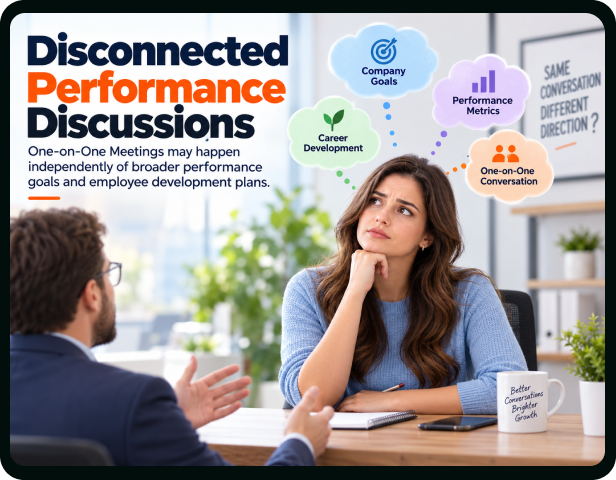
Disconnected Performance Discussions
One-on-One Meetings may happen independently of broader performance goals and employee development plans.
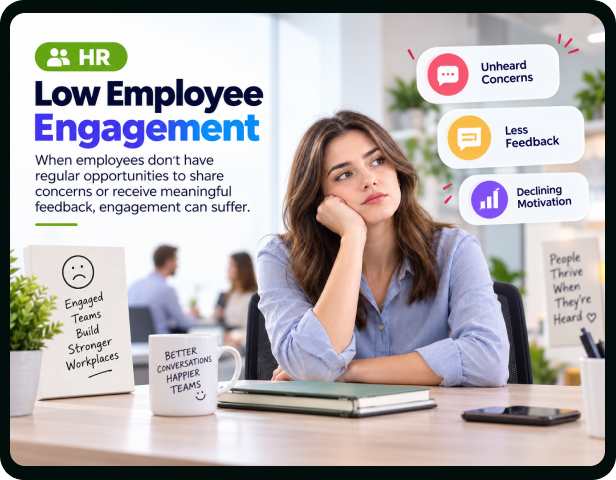
Low Employee Engagement
When employees don't have regular opportunities to share concerns or receive meaningful feedback, engagement can suffer.


Rethink What Performance
Management Can Deliver
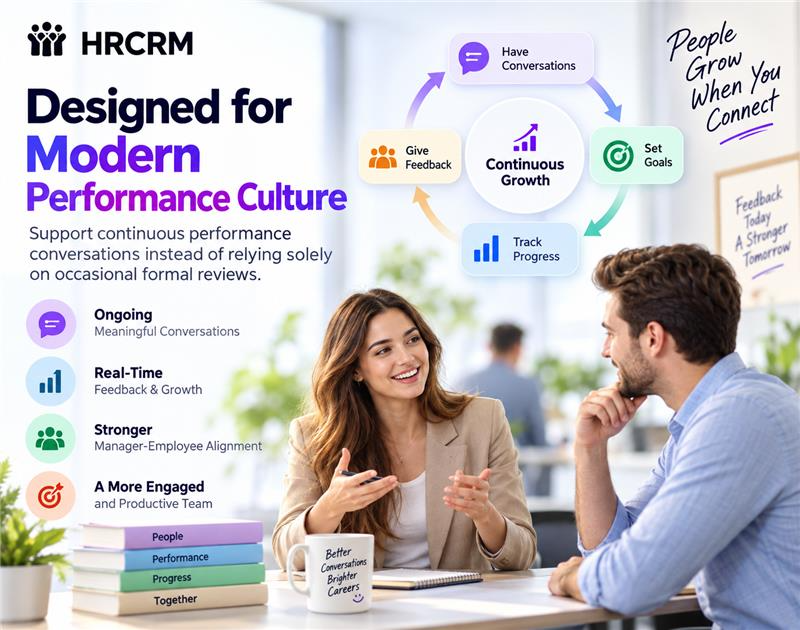
Designed for Modern Performance Culture
Support continuous performance conversations instead of relying solely on occasional formal reviews.
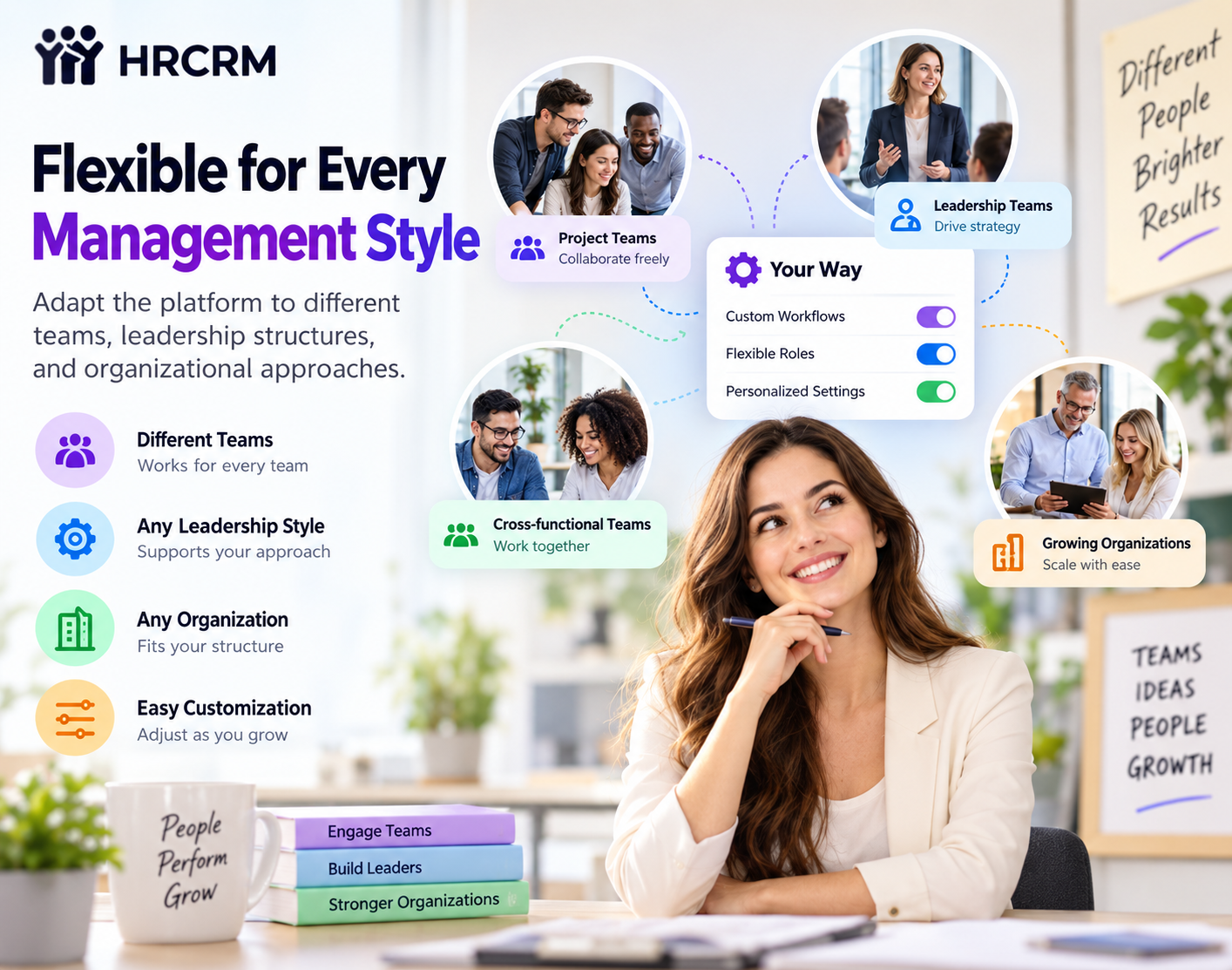
Flexible for Every Management Style
Adapt the platform to different teams, leadership structures, and organizational approaches.
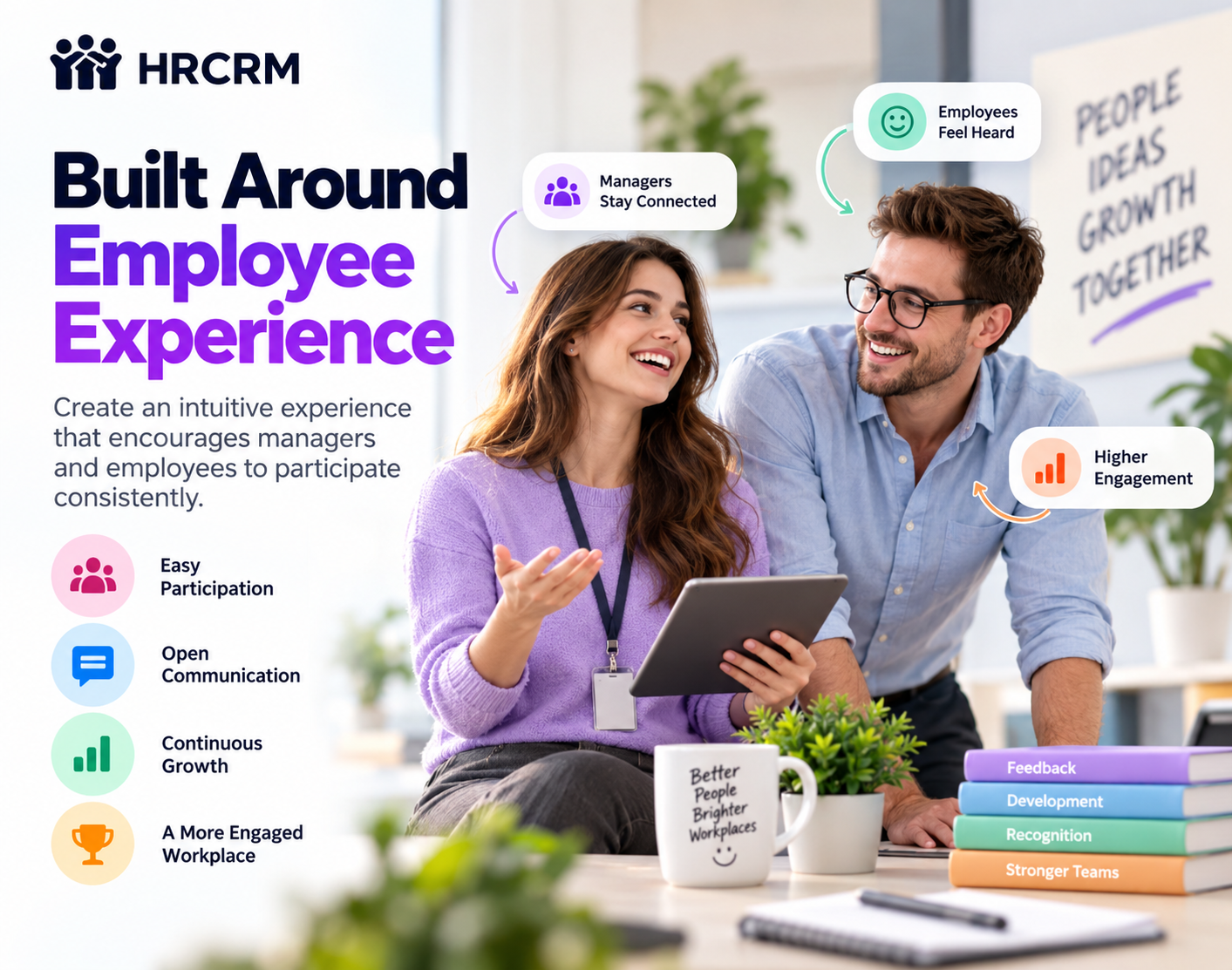
Built Around Employee Experience
Create an intuitive experience that encourages managers and employees to participate consistently.
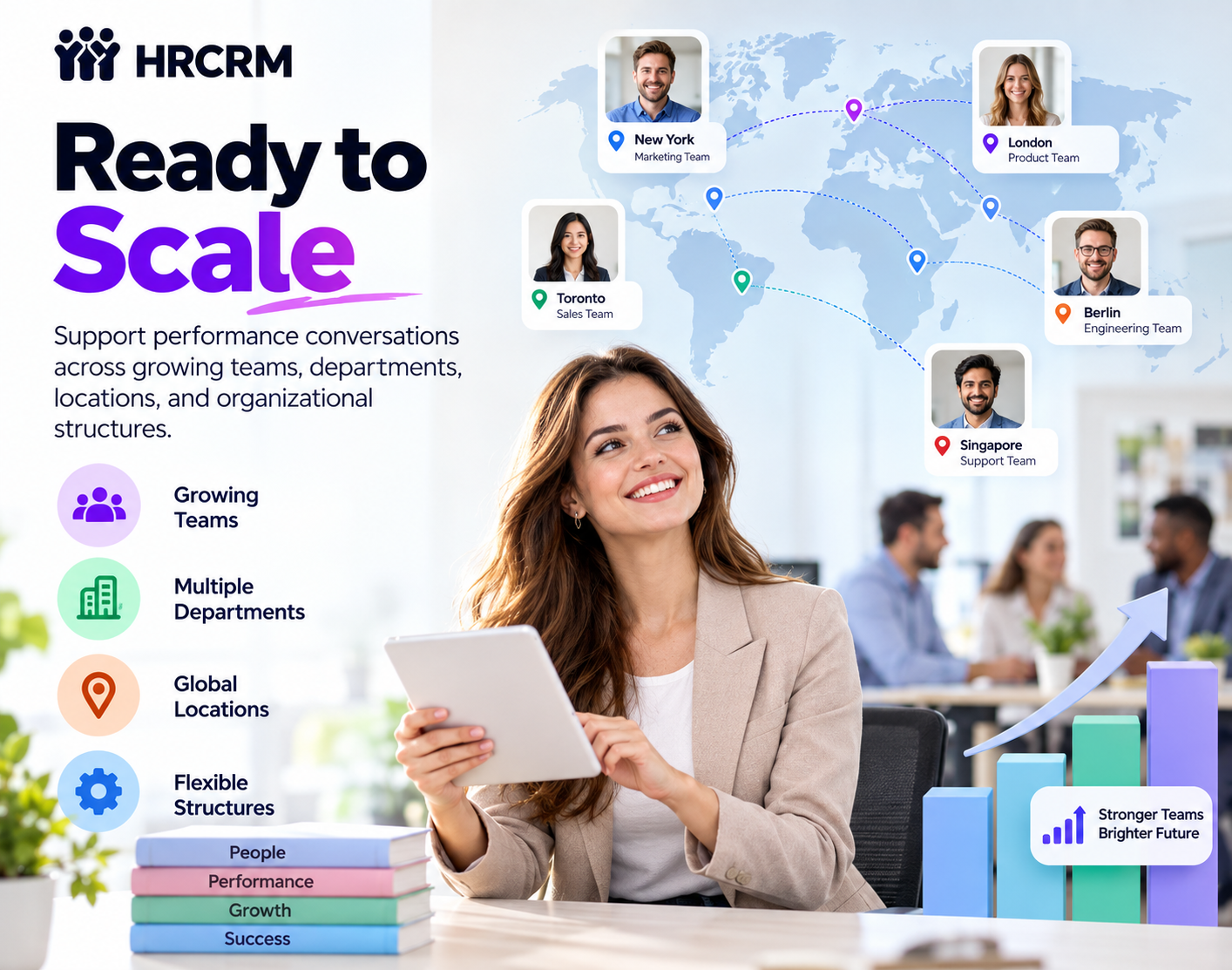
Ready to Scale
Support performance conversations across growing teams, departments, locations, and organizational structures.
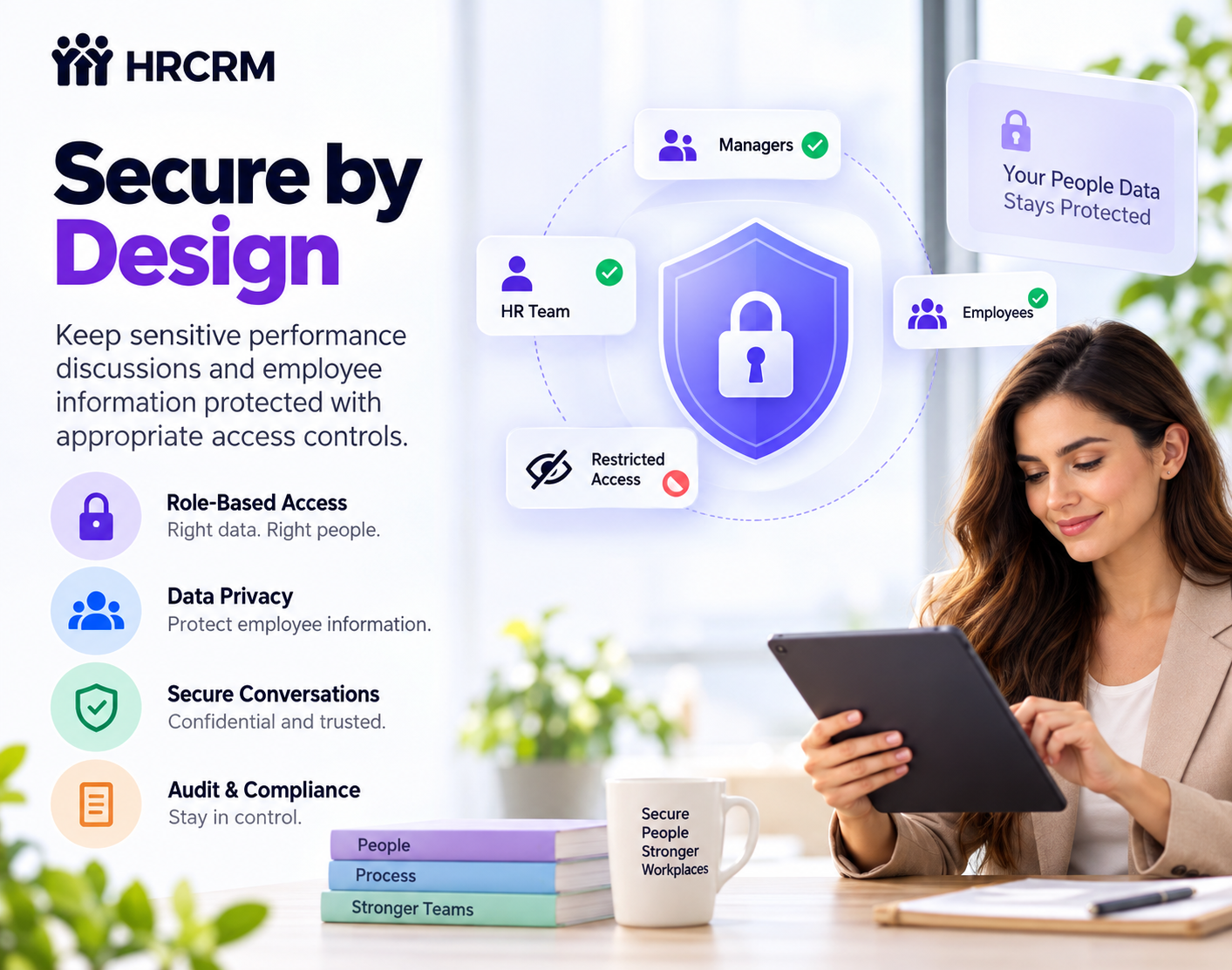
Secure by Design
Keep sensitive performance discussions and employee information protected with appropriate access controls.
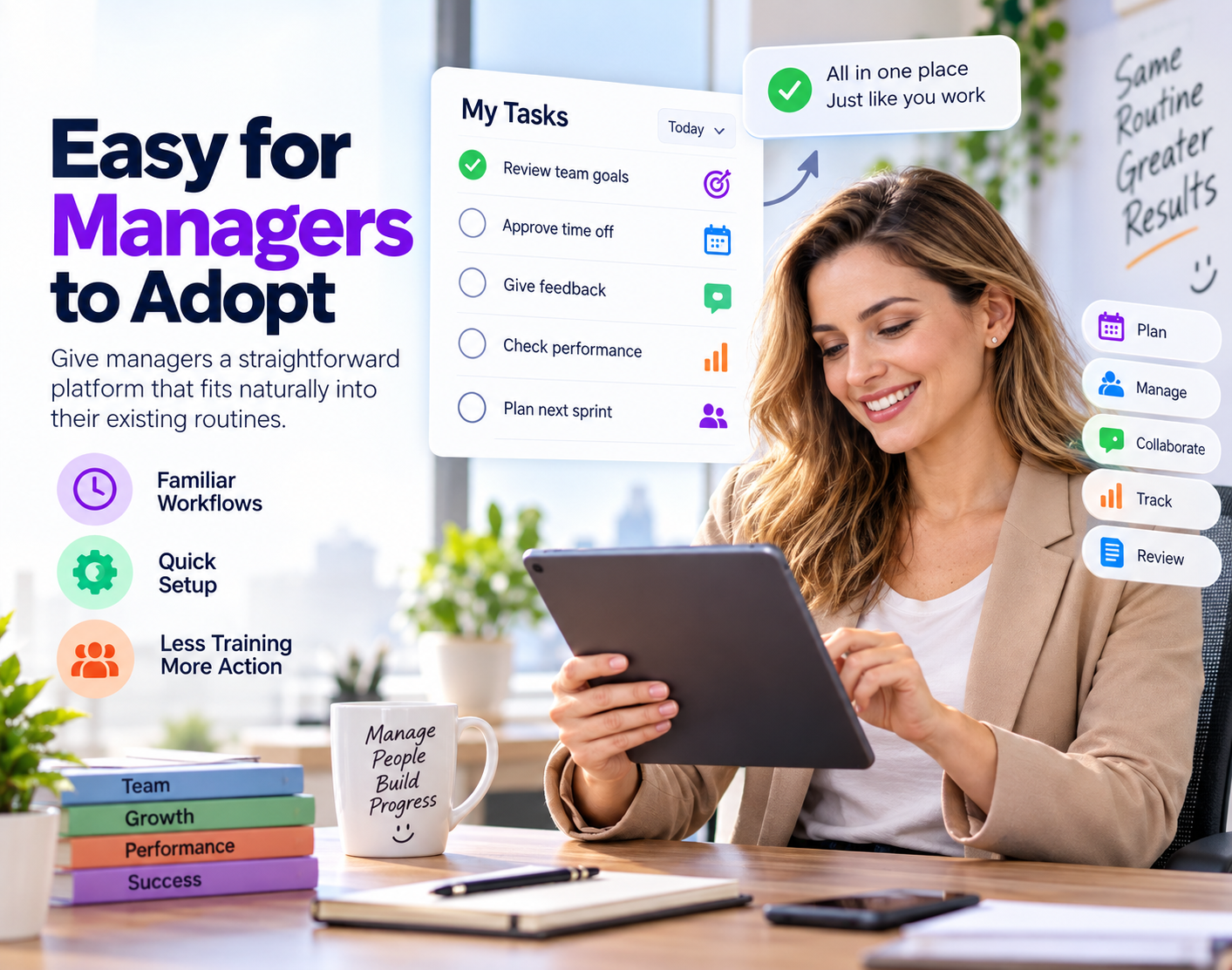
Easy for Managers to Adopt
Give managers a straightforward platform that fits naturally into their existing routines.
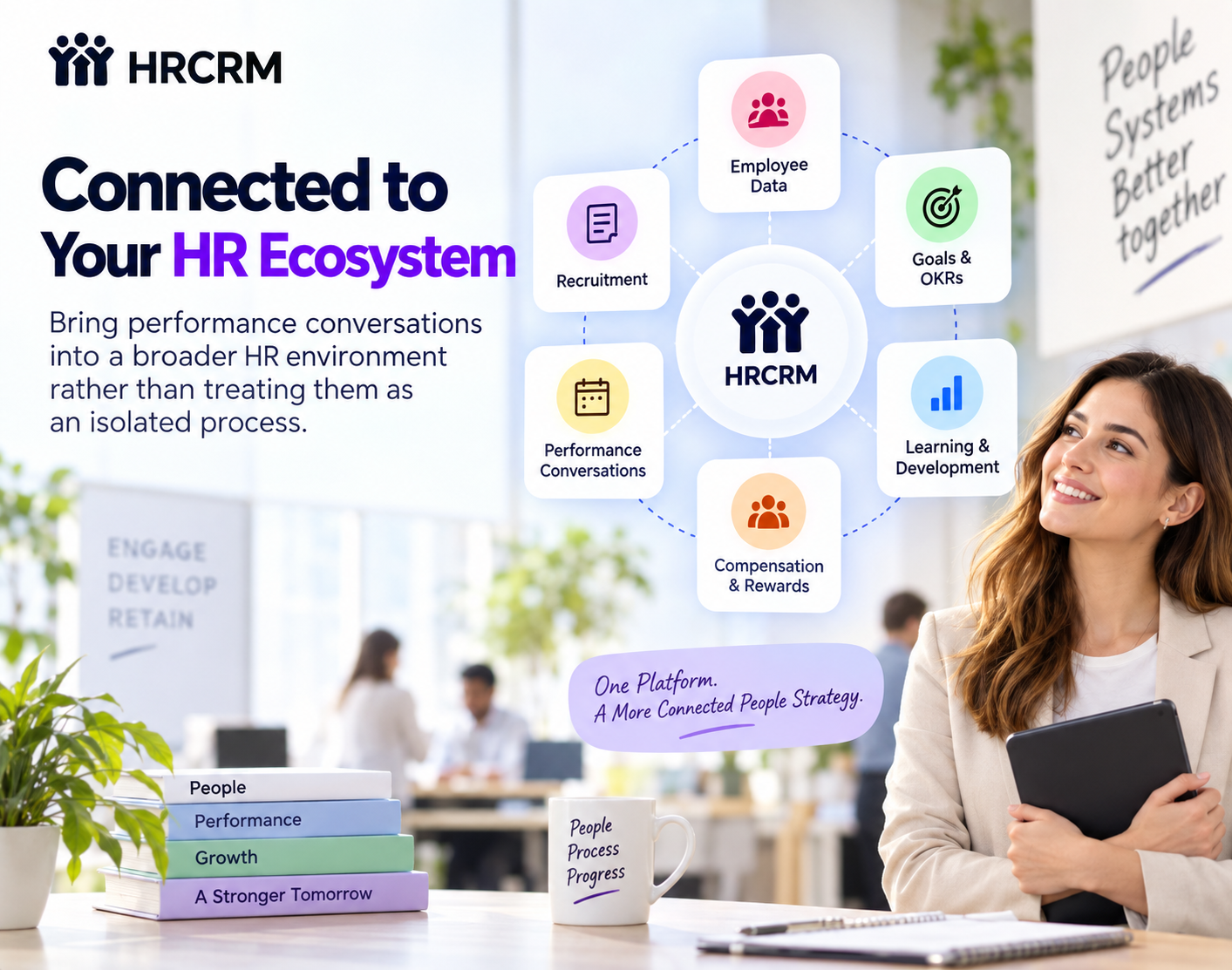
Connected to Your HR Ecosystem
Bring performance conversations into a broader HR environment rather than treating them as an isolated process.
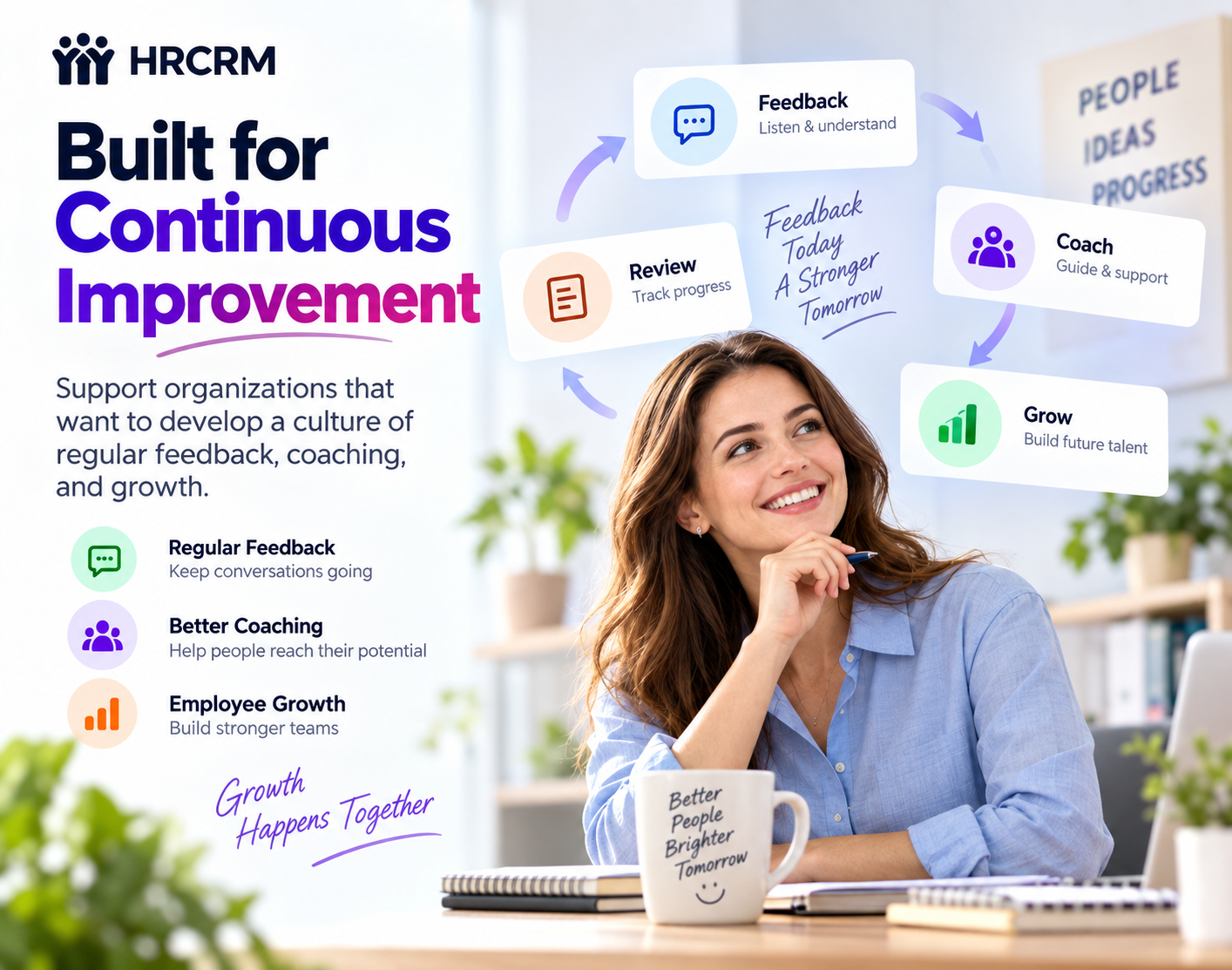
Built for Continuous Improvement
Support organizations that want to develop a culture of regular feedback, coaching, and growth.
The Business Impact of Better One-on-Ones
Improve alignment between managers and employees.
Encourage continuous feedback throughout the performance cycle.
Identify performance challenges before they become larger issues.
Strengthen manager-employee relationships through regular communication.
Give employees greater clarity around expectations and priorities.
Support employee growth through consistent coaching and development discussions.
Increase accountability around agreed actions and performance goals.
Build a stronger culture of engagement, feedback, and continuous improvement.
Bring Better One-on-Ones Into Your Everyday Rhythm
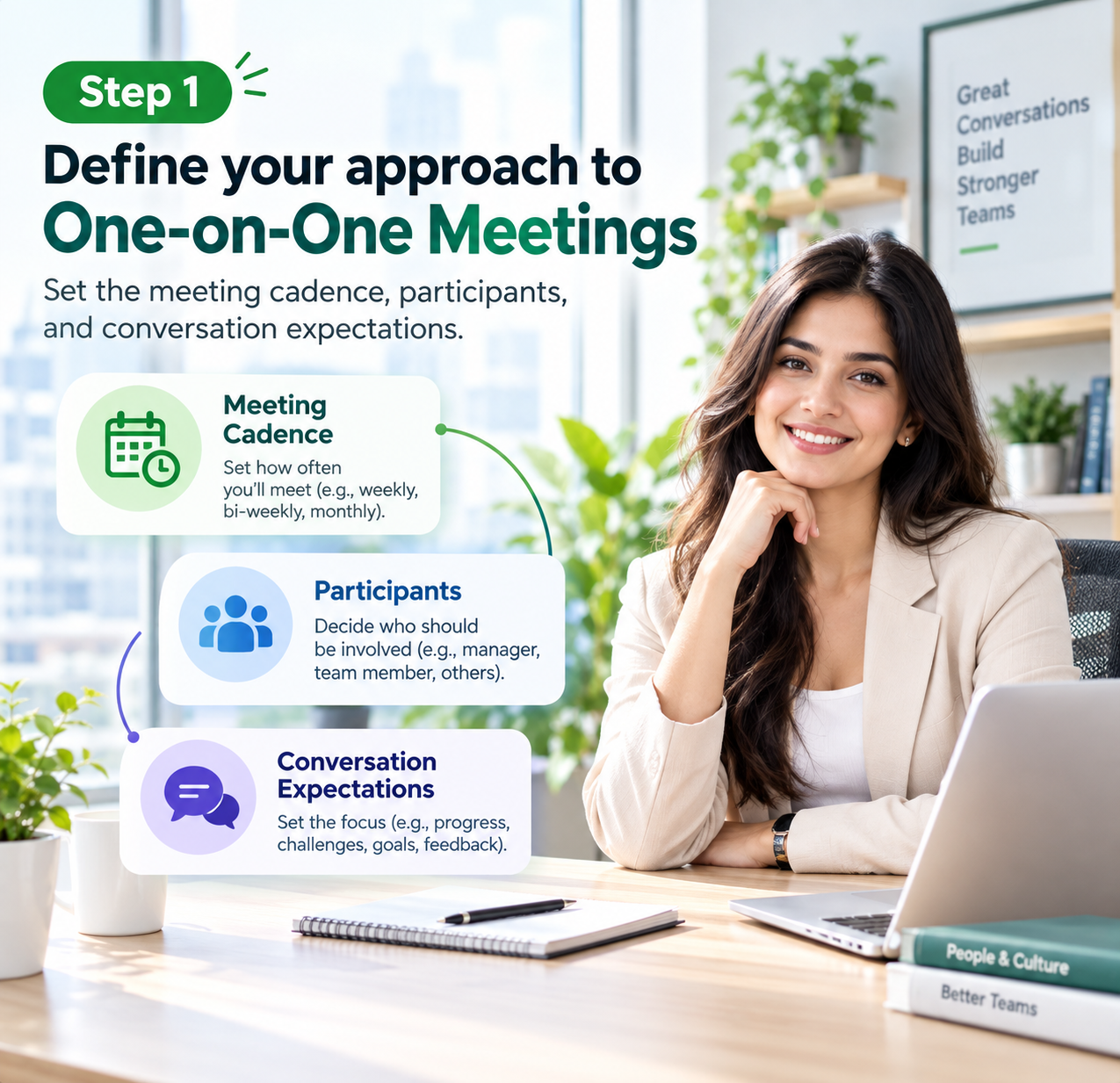
Step 1
Define your approach to One-on-One Meetings, including meeting cadence, participants, and conversation expectations.
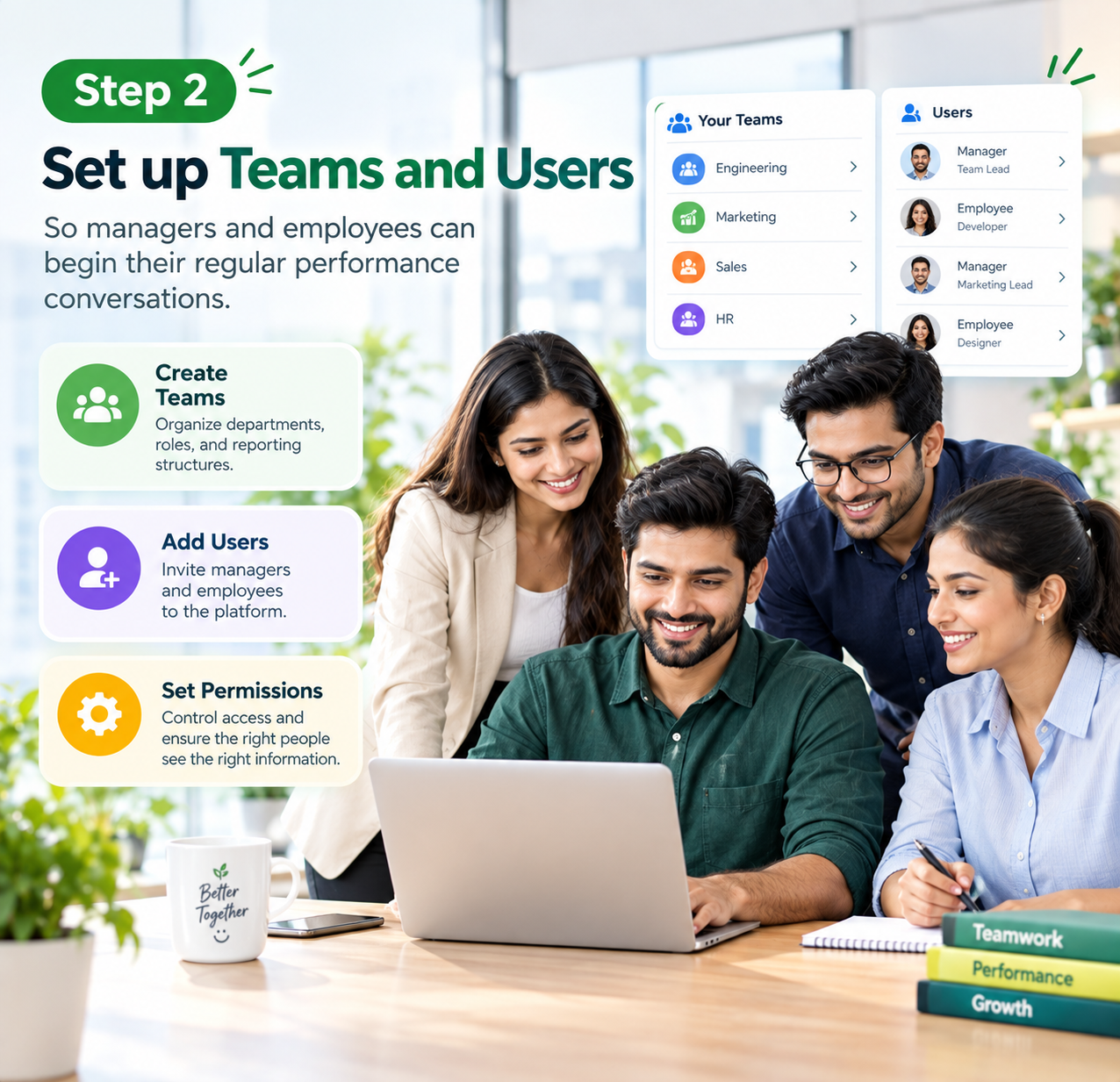
Step 2
Set up teams and users so managers and employees can begin their regular performance conversations.
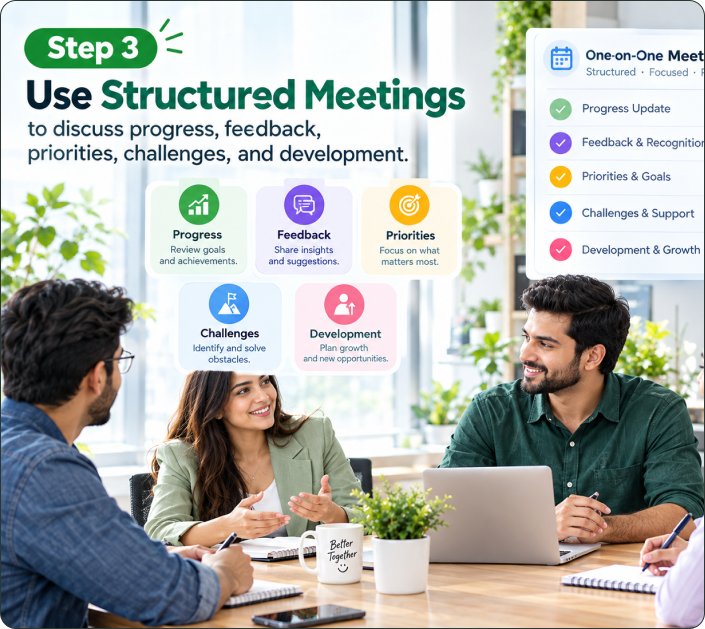
Step 3
Use structured meetings to discuss progress, feedback, priorities, challenges, and development.
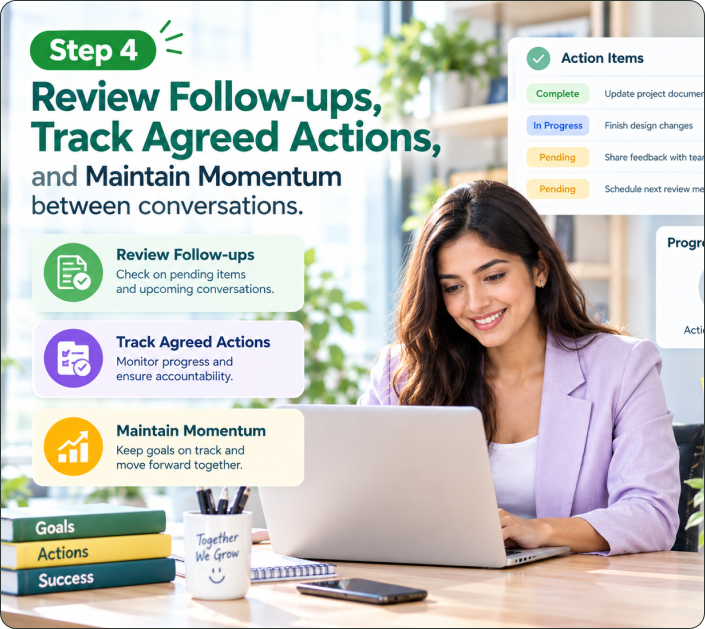
Step 4
Review follow-ups, track agreed actions, and maintain momentum between conversations.
Designed for Teams That Value Continuous Performance
Small Businesses
Build stronger manager-employee relationships with focused conversations that keep performance, expectations, and growth on track.
Growing Startups
Establish a strong feedback culture early, giving fast-growing teams space to discuss priorities, challenges, and development.
Mid-Sized Companies
Bring consistency to performance conversations as departments grow, responsibilities shift, and managers take on larger teams.
Large Enterprises
Create meaningful performance dialogue across complex structures, multiple departments, locations, and diverse employee groups.
Remote & Hybrid Teams
Keep manager-employee conversations personal and productive, even when teams collaborate across different locations and time zones.
Technology Companies
Keep pace with evolving roles through regular conversations around performance, priorities, feedback, and professional development.
Professional Service Firms
Connect employee performance with changing client demands, project priorities, workload expectations, and long-term career development.
Healthcare Organizations
Give managers dedicated time to discuss performance, workload, employee concerns, responsibilities, and opportunities for professional growth.
Education & Institutions
Encourage consistent dialogue across leadership, faculty, and administrative teams around performance, responsibilities, feedback, and development.
Ready to Take One-on-Ones Further?
Create a culture where managers and employees regularly connect, exchange meaningful feedback, address challenges, and turn everyday conversations into opportunities for stronger performance and growth.
Frequently Asked Questions
1. What are One-on-One Meetings in performance management?
One-on-One Meetings are regular conversations between managers and employees focused on performance, priorities, feedback, challenges, development, and professional growth.
2.Why are One-on-One Meetings important for employee performance?
Regular One-on-One Meetings give managers and employees opportunities to discuss expectations, provide timely feedback, identify challenges, and support ongoing development.
3. How can HRCRM improve One-on-One Meetings?
HRCRM brings greater structure and consistency to performance conversations, helping managers and employees maintain regular discussions, follow up on commitments, and keep performance conversations connected to employee growth.
4. How often should managers conduct One-on-One Meetings?
The ideal frequency depends on the organization, team, and employee needs. Many businesses schedule them weekly, biweekly, or monthly to maintain regular communication without making meetings feel excessive.