Stay Ahead of Employee
Document Requirements
Seamlessly organize employee documents, monitor required records, and maintain better visibility into document status.

Give Document Compliance a Clearer Process
The Document Compliance Service of HRCRM enables organizations to manage employee documentation requirements, maintain organized records, monitor document status, and keep important information accessible throughout the employee lifecycle.
When Document Requirements Become Difficult to Manage
Essential Documents Go Missing
Employee records may be incomplete when required documents are stored across different files or locations.
Document Status Becomes Unclear
The HR Team might struggle to determine which employee documents are submitted, pending, expired, or missing.
Expiry Dates Get Overlooked
Important documents with validity periods may approach expiration without proper and timely attention.
Manual Follow-Ups Increase
The HR Team may spend unnecessary time contacting employees for missing or updated documents.
Records Becomes Outdated
Employee documentation may not reflect changes in personal details, roles, or compliance requirements.
Document Access Gets Complicated
Finding the right employee document can become difficult when records are not organized consistently.
Compliance Reviews Take Longer
Collecting and verifying relevant documents during internal reviews or audits can require significant administrative effort.
Requirements Are Applied Inconsistently
Different teams may follow different approaches to collecting, updating, and maintaining employee documents.








Make Every Required Record Easier to Manage
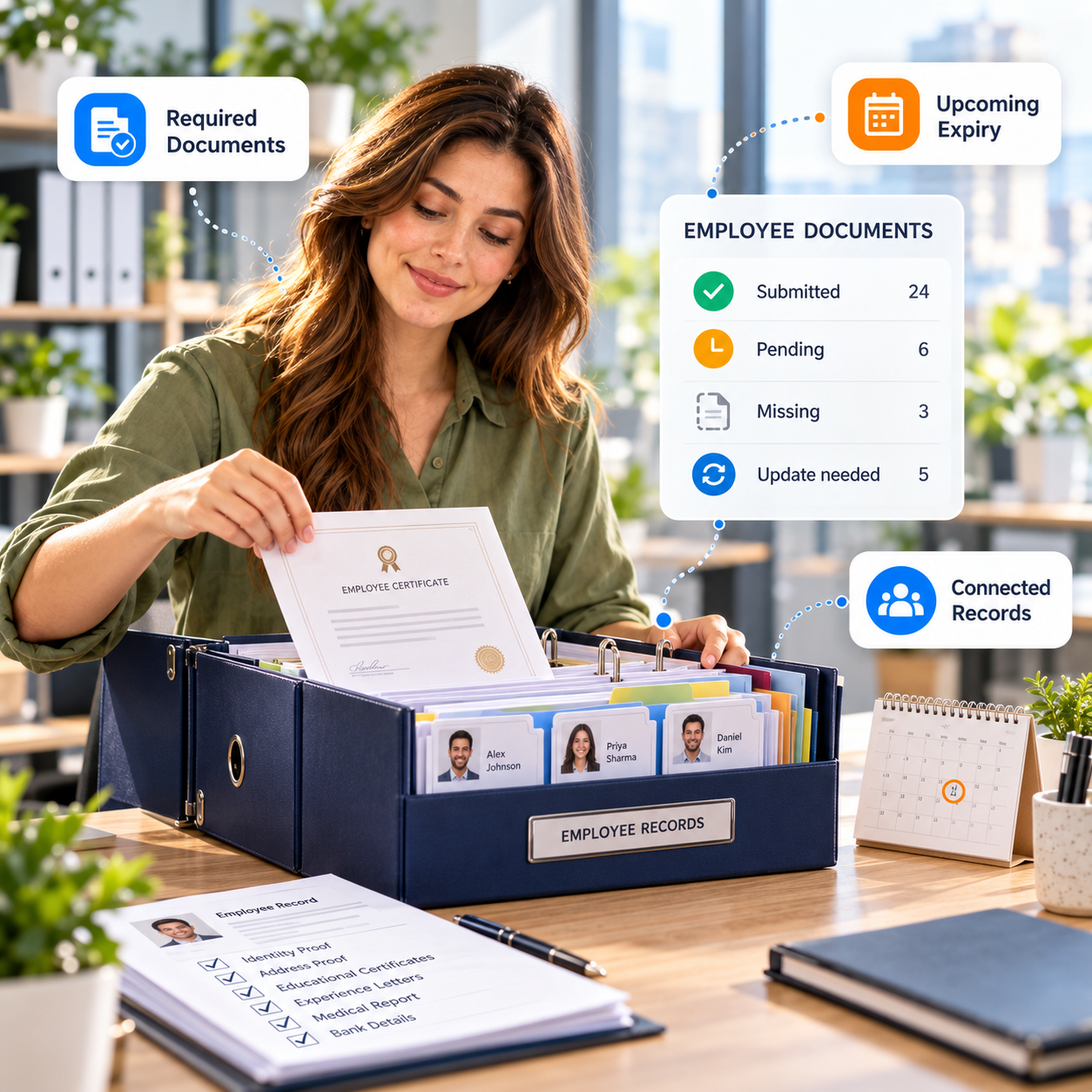
Centralized Document Records
Keep every employee documents organized within a connected HR environment.
Document Requirement Tracking
Maintain visibility into the documents required for employees and relevant roles.
Document Status Visibility
Review which documents are submitted, pending, missing, or require updates.
Expiry Date Monitoring
Keep track of documents with validity periods and upcoming expiration dates.
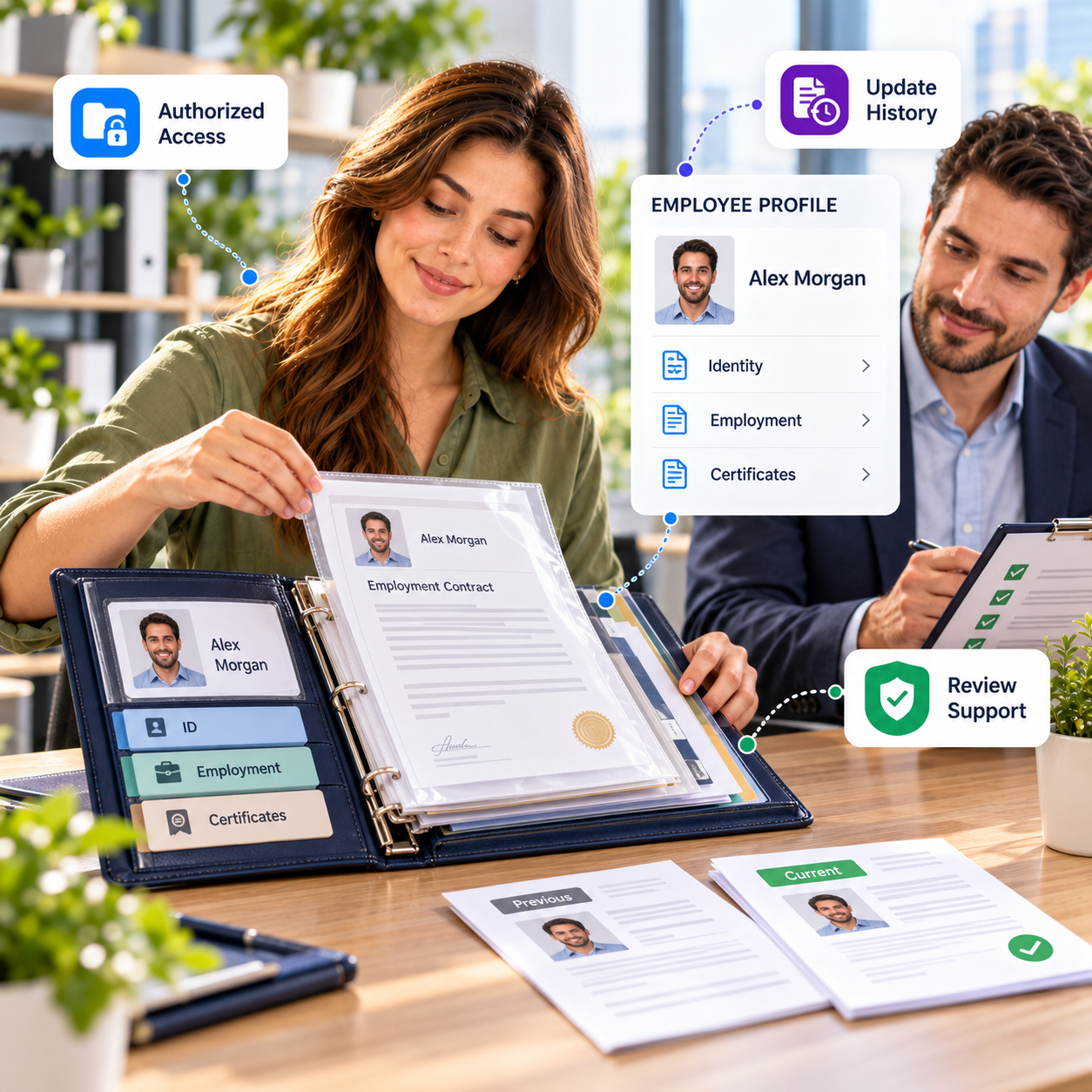
Employee Document Profiles
Connect important documentation with relevant employee records.
Organized Document Access
Make employee documentation easier for authorized users to locate and review.
Document Update Tracking
Maintain clearer records as employees submit updated or replacement documents.
Compliance Review Support
Keep relevant employee documentation organized for internal reviews and compliance-related processes.
What Better Documentation Can Bring to Your Business
Reduce time spent searching for employee documents.
Improve visibility into missing and pending records.
Minimize overlooked document updates and expirations.
Support more consistent documentation practices across teams.
Make relevant records easier to access when required.
Reduce repetitive follow-ups for employee documentation.
Improve preparation for internal reviews and audits.
Maintain more complete and organized employee records.
A Clearer Path to Compliance-Ready Documentation
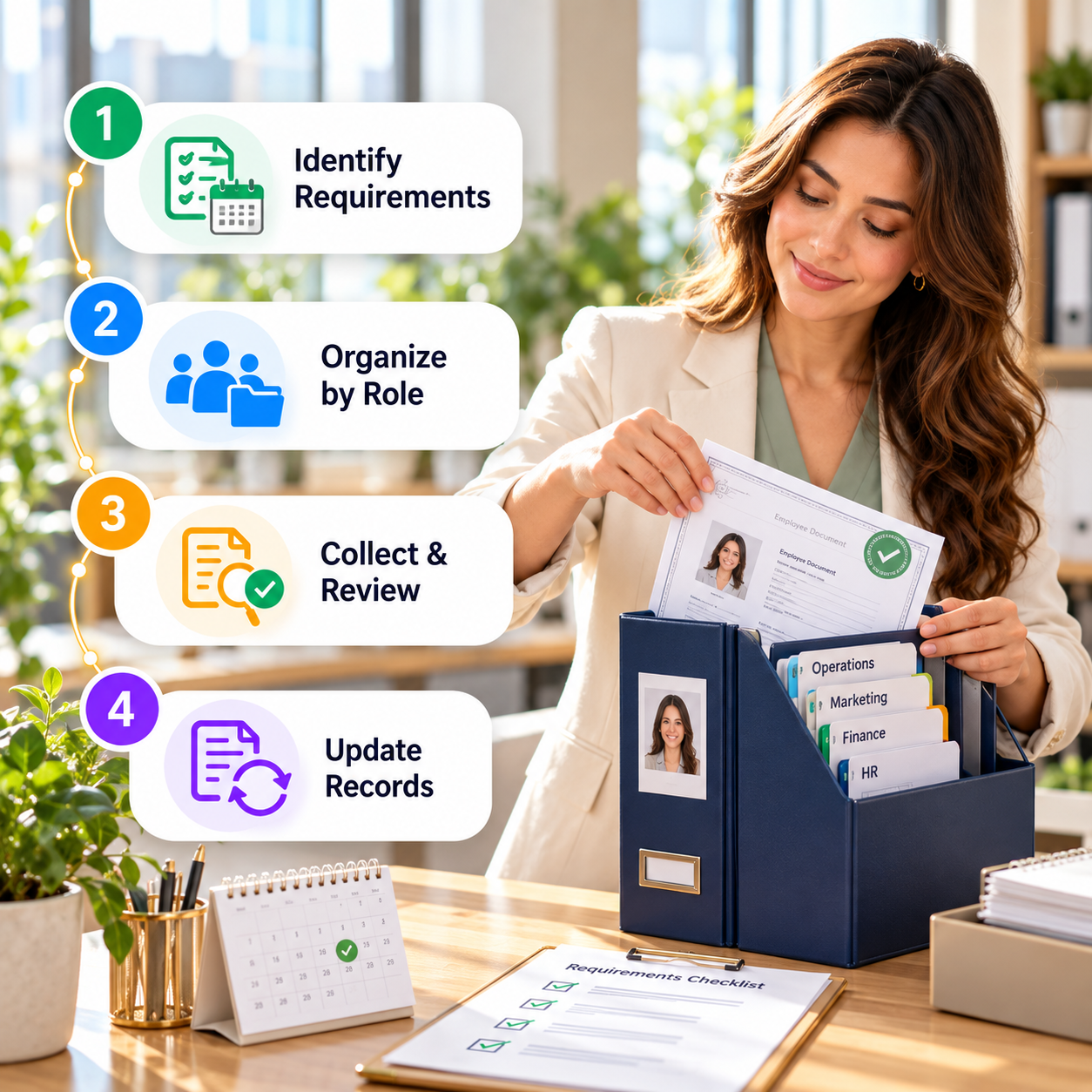
Step 1 :
Identify required employee documents, applicable requirements, validity periods, and relevant organizational policies.
Step 2 :
Organize document requirements by employee, role, department, or other relevant workforce categories.
Step 3 :
Collect and review employee documents while monitoring submission status and document validity.
Step 4 :
Update employee records as documents are submitted, verified, renewed, or replaced.
For Organizations That Depend on Complete Records
Healthcare Organizations
Maintain organized employee credentials, professional documents, and relevant workforce records.
Manufacturing Businesses
Manage employee documentation connected with operational and workplace requirements.
Construction Companies
Maintain all the relevant employee records across growing teams and changing workforce requirements.
IT and Software Companies
Organize employee records across growing teams and changing workforce requirements.
Financial Services
Maintain structured employee documentation for relevant internal and professional requirements.
Educational Institutions
Keep employee records organized across different academic and administrative teams.
Logistics and Transportation
Maintain complete visibility into workforce documents relevant to operational roles.
Professional Services
Organize employee documentation that supports roles and client-facing responsibilities.
Large Enterprise
Coordinate employee document requirements across multiple teams, departments, and locations.
Stay Ready With Organized Documentation
Combine employee documents, required records, document status, and updates with HRCRM to create a more organized approach to document compliance.
Frequently Asked Questions
Why is Document Compliance essential for organizations?
Document Compliance helps organizations maintain complete employee records, monitor document requirements, support internal reviews, and reduce administrative gaps.
Can HRCRM support Document Compliance?
Yes, HRCRM can support Document Compliance. HRCRM helps organizations efficiently organize employee documents, track document requirements, monitor status, and maintain relevant records within a connected HR environment.
Can HRCRM monitor document expiry dates?
Yes, HRCRM can monitor document expiry dates. HRCRM can help track validity periods and identify employee documents that might require renewal or replacement.
Can Document Compliance by HRCRM reduce manual HR work
Yes, Document Compliance by HRCRM can reduce manual HR work. Centralized document records and clearer status visibility can reduce repetitive searching, manual tracking, and follow-ups.