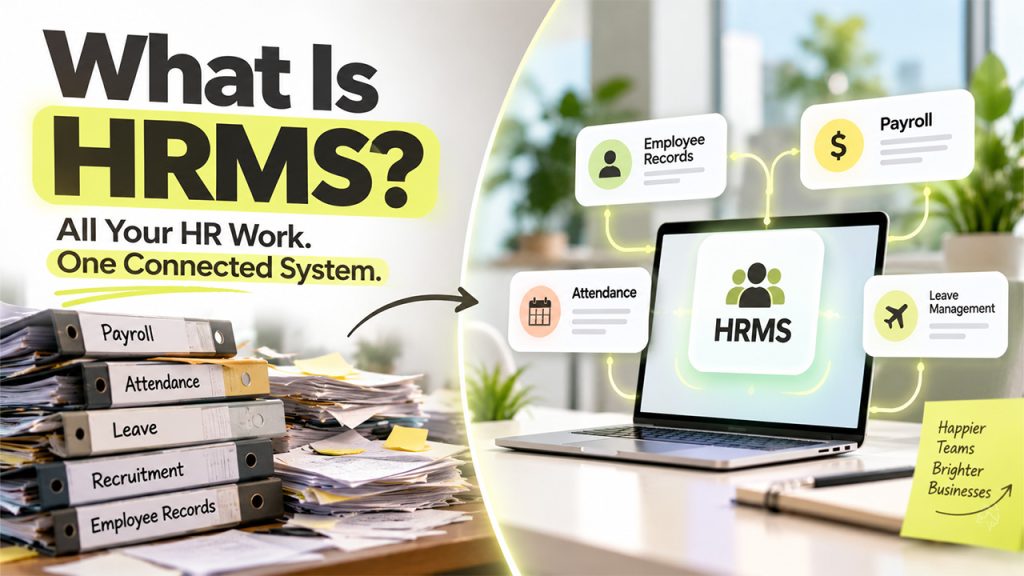
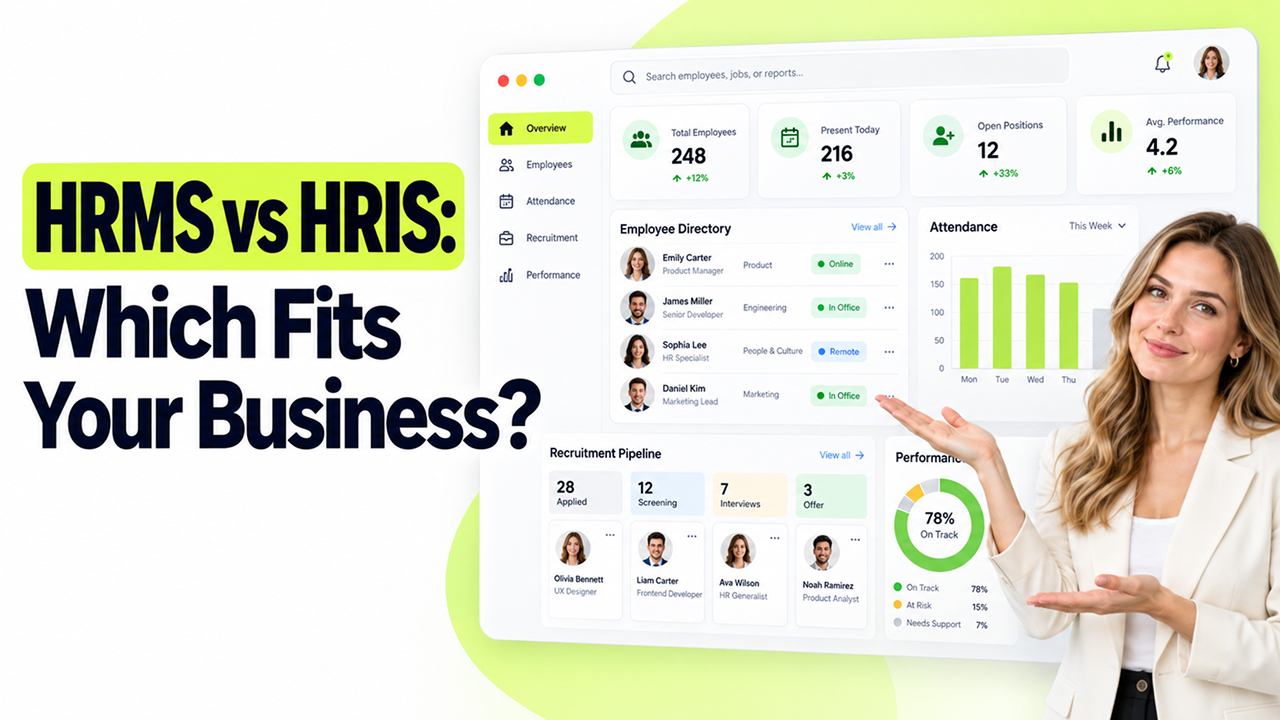

Many businesses find themselves confused by the differences between HRMS and HRIS because the two concepts seem to overlap with each other. In a simple way, HRIS is primarily concerned with the core HR functions and the processing of employee data, whereas HRMS is more of a comprehensive HR management and automation solution. The current solutions, however, encompass both aspects. By understanding the main idea of HRMS vs HRIS, it is possible to select the appropriate software that serves your needs.
HRMS vs HRIS: The Basics Explained
Before we get down to discussing the differences between HRMS and HRIS, we need to clarify what concepts these terms refer to.
What Is HRMS?
Human Resource Management System (HRMS) is an umbrella term that refers to integrated software applications used to store employee data and perform various human resource management functions available in the system. Therefore, almost all of the functions of the HRMS system may include payroll, benefits, attendance, recruitment, performance management, and employee self-service. These solutions help organizations cut costs associated with human error due to duplicate entries and reduce the hours spent on data entry and processing.
What Is HRIS?
A Human Resource Information System (HRIS) is a centralized repository of employee data with built-in functions to perform essential HR operations.
Depending on the solution, modern HRIS software tends to offer a broader array of functions beyond simple data storage and retrieval. These can include leave management, payroll processing, recruitment and onboarding tools, performance management, reporting and analytics, and employee self-service options.
In short, the difference between HRIS and HRMS is often hard to see, because the two terms are used interchangeably.
HRMS vs HRIS: Short Comparison
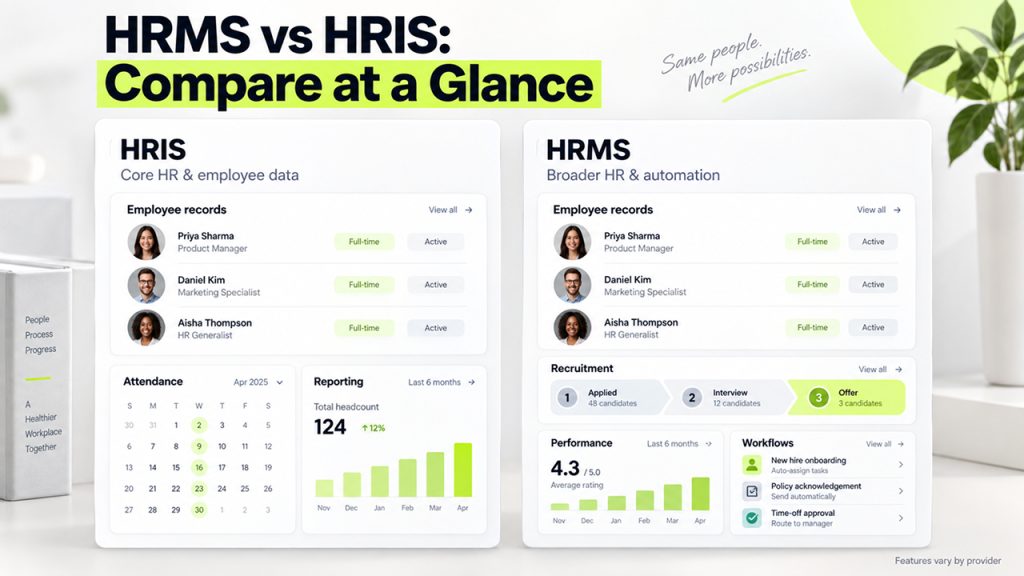
HRIS vs HRMS comparison boils down to the different approaches to automating and streamlining human resource management functions.
| Feature | HRIS | HRMS |
| Primary focus | Employee information and core HR functions | Broader HR management and process automation |
| Employee records | Centralizes employee information and records | Centralizes employee information with broader workforce management |
| Recruitment & onboarding | May offer basic recruitment and onboarding tools | Often provides more comprehensive recruitment and onboarding workflows |
| Performance management | May include performance tracking and reviews | Typically offers broader performance and talent management |
| Automation & reporting | Provides reporting with basic to advanced automation | Usually offers broader automation, workflows, and HR analytics |
In essence, HRIS solutions focus on employee data and core HR operations, whereas HRMS solutions provide a more holistic approach to human resource management and automation.
HRMS vs HRIS: Feature Comparison
By looking at the features of each solution category, you can get a better idea of what to search for when comparing different providers. While most solutions have a similar feature set, the level of sophistication and the set of included tools can vary significantly.
HRMS
An HRMS solution typically bundles a number of functions together to help organizations streamline their human resource management operations. In general, they provide a wider array of tools compared to HRIS solutions.
Managing employees:
HR managers can stay organized, as it is possible to retain all employee documents in a single location and have a clear understanding of the organization chart.
Payroll and employee monitoring:
The features included in the payroll system vary according to the service provider but generally include attendance, working hours, sick leave, and some additional attributes that offer automation of payroll operations.
Recruitment and hiring:
Some companies offer an employee management system that makes it easy to post jobs online, monitor applications, and conduct the hiring process.
Performance management:
An integrated performance management system lets managers keep track of employees’ performance and hold performance reviews. This creates a unified environment for managers and employees to address talent management issues.
HRIS
As mentioned above, an HRIS solution serves to help organizations keep track of employee information and perform core HR functions. More modern solutions, however, allow organizations to go beyond simple data storage and management.
Employee files:
An all-in-one employee data collection enables HR managers to preserve employee information organized in a single protected place.
Attendance and absence:
Thanks to synchronized attendance and absence management, employees can submit requests for time off, while managers can approve or decline such requests from the same platform. It makes the process easier and eliminates the need for emails and record-keeping.
Benefits management:
A benefits management system allows businesses to keep employee benefits information and records in one secure location. It also eases future access and comprehension of the information and minimizes the chances for mistakes.
Employee self-service:
Many solutions in this category offer a self-service portal for employees. This feature allows employees to update their information, access documents, and perform other routine operations, reducing the reporting load on the HR department.
The difference between HRIS and HRMS is not set in stone, which is why it’s important to take a closer look at the features each solution offers. Bear in mind that the level of sophistication and the set of tools can vary significantly between providers.
Benefits of HRMS and HRIS
HR systems and software solutions provide numerous benefits for businesses that use them. Beyond helping to store employee data in one secure place, they can help to automate repetitive tasks and provide employees with the ability to perform routine operations themselves.
Centralized Employee Data
Having all employee data in one secure place provides numerous advantages for organizations. First and foremost, it reduces the risk of losing or misplacing this data. In addition, it becomes much easier to keep this information up-to-date and consistent across different platforms.
Without proper organization, data can be scattered across different apps and physical documents, increasing the risk of errors due to copying and pasting. Maintaining employee data in one secure location eliminates this issue.
Less Manually Intensive
By implementing end-to-end automation in payroll, leave tracking, attendance, and other functions, HR managers can reduce the number of monotonous, repetitive tasks they have to do. This, in turn, helps to reduce the risk of human errors associated with these operations.
Higher Data Consistency and Reduced Errors
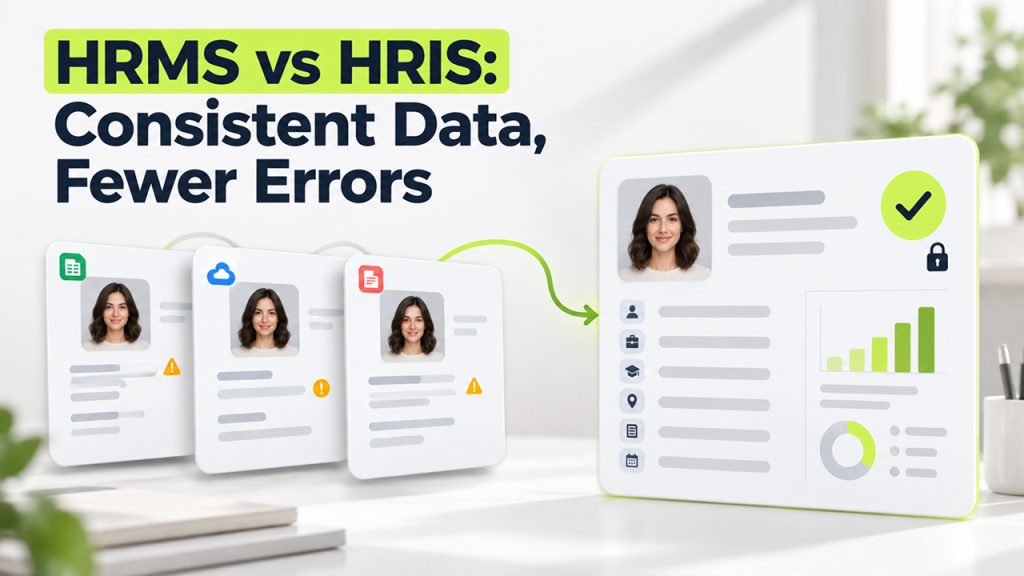
Working with data is inherently error-prone, especially when the same information has to be maintained in different applications. Even the tiniest mistake can have serious financial and administrative consequences. By maintaining employee data in one secure location, organizations can significantly reduce the risk of errors and inconsistencies.
Additionally, having access to consistent data reduces the risk of miscalculations and incorrect information in reports.
Easier Employee Self-Service
Modern solutions provide employees with the ability to access certain data, update their information, and perform other routine operations. As a result, employees are able to complete many time-consuming, low-complexity operations themselves, whereas previously they would have to turn to the HR department for assistance.
This, in turn, reduces the reporting and administrative burden on the HR department and allows them to redirect their time and efforts toward more important issues.
Conclusion
The distinction between HRMS and HRIS can cause confusion as both terms are used interchangeably. HRIS is mostly concerned with employee information and core human resource processes, while HRMS provides a wider scope of human resource management activities and automation processes. However, the more organizations use these terms interchangeably, the more important it is to focus on HRMS vs HRIS in the practical sense. What matters most is choosing a solution that fits your organization’s needs.
Frequently Asked Questions
Is HRMS better than HRIS?
Neither is universally better. HRIS suits organizations with basic HR needs, while HRMS suits those seeking broader HR management, automation, and overall efficiency.
Can HRIS and HRMS be used interchangeably?
Yes, because many organizations and providers use these terms interchangeably. According to an official SHRM source, these terms are used interchangeably in many cases.
Does an HRIS solution include payroll?
Depending on the provider, an HRIS solution may either include payroll functions or be integrated with a separate payroll application.
Does an HRMS solution include HRIS features?
Yes, because an HRMS typically includes all the features of an HRIS, but with added functionality to provide end-to-end tools for a variety of human resource management functions.