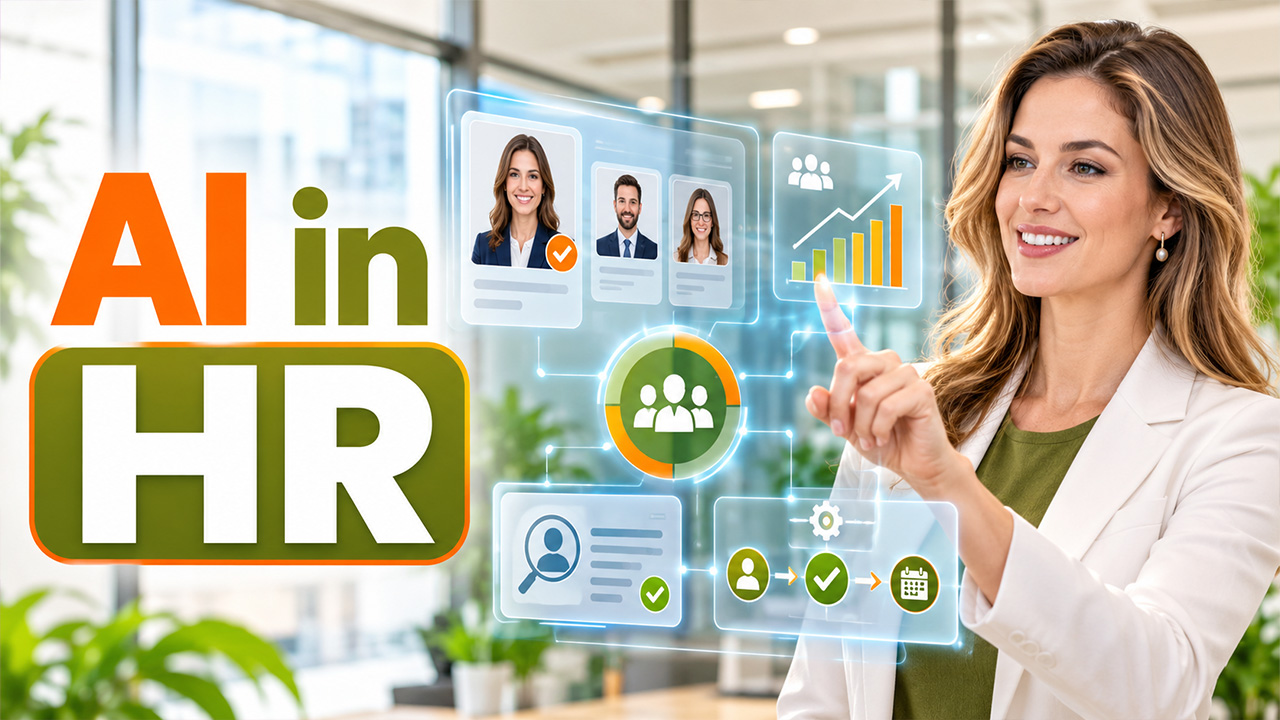

Human resources teams manage far more than recruitment and employee records. They coordinate onboarding, payroll, performance reviews, workplace policies, employee concerns, and workforce planning. As these responsibilities grow, AI in HR offers a way to reduce repetitive work while helping professionals make better-informed decisions.
Artificial intelligence can review applications, answer routine employee questions, identify workforce patterns, and generate training materials. However, its usefulness depends on the quality of the information it receives and the way organizations apply its recommendations.
For businesses in the USA, Pakistan, India, and Australia, the opportunity is not simply to automate HR departments. It is to build more responsive, consistent, and responsible people-management processes.
Where AI Is Making a Practical Difference in HR
The most useful applications of AI in HR address specific operational problems rather than attempting to replace entire HR functions.
1. Recruitment and Candidate Screening
Recruitment teams often receive hundreds of applications for a single vacancy. Reviewing every resume manually can delay shortlisting and make it difficult to compare applicants consistently. An AI resume screening solution helps recruiters evaluate applications against job requirements and identify relevant candidates more efficiently.
AI recruitment tools can extract qualifications, identify relevant skills, organize candidate information, and compare applications against predefined job requirements. Some systems can also assist with interview scheduling and candidate communication.
Example: A company hiring several software developers can use AI to organize applications by programming skills, project experience, and required qualifications. Recruiters can then review suitable candidates instead of sorting every application individually.
However, AI should support screening rather than make final hiring decisions. HR professionals must consider career changes, transferable skills, employment gaps, and individual circumstances.
2. Employee Onboarding and Self-Service
New employees frequently need assistance with documentation, company policies, leave procedures, and internal systems. Answering the same questions repeatedly consumes HR time.
AI assistants can respond to common questions, explain onboarding steps, and direct employees toward relevant information. Generative AI can also help HR teams prepare role-specific orientation materials and internal announcements.
For example, a new employee joining a company in Australia may need information about attendance procedures, leave policies, and reporting responsibilities. An employee-facing assistant can make approved information easier to access.
The important distinction is that AI should provide information based on current company policies. Sensitive employment matters should still reach an authorized HR professional.
3. Performance Management and Employee Development
Traditional performance reviews often depend on information collected shortly before review meetings. This can leave managers with an incomplete picture of employee contributions.
AI in HR can help organize feedback, summarize performance records, identify skill gaps, and highlight trends in employee development. Managers can use these insights to prepare more meaningful discussions.
For instance, if an employee consistently meets project deadlines but needs additional technical training, an AI-supported system may help identify that development requirement from available performance information.
These insights should not become automatic judgments about an employee’s value. Managers need to consider responsibilities, working conditions, individual goals, and relevant context.
4. Payroll, Attendance, and Administrative Workflows
Payroll and attendance involve repetitive processes where missing information or incorrect entries can create problems.
AI-enabled systems can help identify unusual attendance patterns, organize payroll information, flag incomplete records, and route administrative requests. Rule-based automation can also handle predictable approval steps.
A growing business with employees across multiple locations, for example, may use automated workflows to route leave requests to the appropriate manager while maintaining an organized record.
Organizations can explore HR workflow automation to understand how connected approval processes support daily HR operations.
5. Workforce Analytics and Planning
Workforce planning becomes difficult when employee information is scattered across spreadsheets, payroll applications, and recruitment systems.
AI-powered analytics can examine available workforce information to identify patterns in recruitment, employee turnover, staffing requirements, and workforce costs.
For example, a retail organization preparing for seasonal demand may examine historical staffing requirements and current workforce availability to plan recruitment more effectively.
HRCRM provides an HR analytics platform that presents workforce information through reporting and analytics capabilities. The usefulness of any such system depends on accurate records and appropriate interpretation.
The Business Benefits of AI in HR
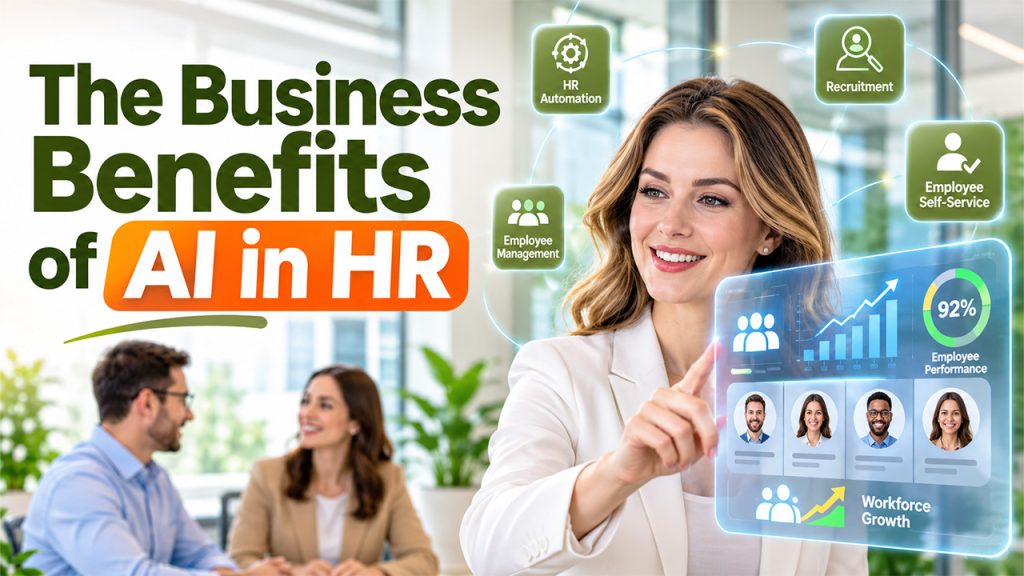
When implemented around clearly defined needs, AI can improve several aspects of HR operations.
Greater Operational Efficiency
Routine activities such as organizing applications, answering common questions, and processing requests require less manual attention.
More Consistent Processes
Standardized criteria can help teams apply similar procedures across departments and locations.
Better Workforce Visibility
Analytics can help HR leaders understand staffing patterns, skill requirements, and employee trends.
Improved Employee Access
Self-service assistants can make approved HR information easier to find.
More Time for People-focused Work
HR professionals can devote additional attention to employee development, workplace concerns, and organizational planning.
These benefits are not automatic. They depend on implementation quality, employee adoption, data accuracy, and ongoing oversight.
The Risks Organizations Should Not Overlook
The benefits of AI in HR come with responsibilities. HR decisions can affect people’s income, career opportunities, privacy, and professional reputation. Mistakes therefore have consequences beyond ordinary software errors. Following responsible AI practices in workforce management helps organizations maintain transparency, human oversight, and trust in high-impact HR decisions.
Algorithmic Bias and Unfair Decisions
An AI system trained on historical recruitment or performance data may reproduce existing patterns of discrimination. Even when demographic information is excluded, other data points can act as indirect indicators.
The US Equal Employment Opportunity Commission explains that existing employment discrimination protections also apply when employers use AI-based employment tools.
Organizations should test systems for unequal outcomes, review selection criteria, and provide a way for candidates or employees to raise concerns.
Employee Privacy and Data Security
HR databases contain sensitive information, including contact details, salary records, employment history, and sometimes health-related information.
Sending this information to unapproved AI platforms can expose employees and organizations to unnecessary risks.
Before adopting AI in HR, companies should establish access controls, data-retention rules, approved tools, and clear policies about how employee information can be processed.
Incorrect or Misleading Outputs
Generative AI can produce convincing answers that contain inaccurate information. An assistant might misinterpret a leave policy, summarize a performance review incorrectly, or generate an outdated explanation of workplace procedures.
For this reason, sensitive outputs should be checked against official records and approved policies.
Overdependence on Automation
Not every HR situation can be evaluated through structured data. Workplace conflict, employee wellbeing, disciplinary matters, and reasonable accommodation requests often require empathy and individual consideration.
AI should make HR professionals better equipped to handle these situations, not remove the human judgment they require.
The International Labour Organization’s research on AI in human resource management also highlights concerns involving biased data, poorly defined objectives, and opaque systems.
How to Introduce AI Without Disrupting HR Operations
A successful implementation begins with a manageable problem rather than purchasing technology simply because it includes AI.
1. Identify Repetitive Tasks
Review recruitment administration, employee queries, document processing, reporting, and approval workflows. Select one process that creates a measurable operational burden.
2. Define the Expected Outcome
Decide whether the objective is to reduce processing time, improve record accuracy, make information easier to access, or strengthen workforce reporting.
3. Evaluate AI HR Software Carefully
Check integration options, data protection practices, access permissions, reporting capabilities, configuration requirements, and human review options.
4. Start with a Controlled Pilot
Test the selected workflow with a limited team. Compare its results with the existing process and collect feedback from employees and HR professionals.
5. Establish Accountability
Assign responsibility for reviewing outputs, correcting errors, handling complaints, and monitoring system performance.
6. Train the HR Team
Employees should understand what the system can do, where it can fail, and which decisions must remain under human control.
The NIST AI Risk Management Framework offers a useful foundation for identifying and managing risks throughout the AI lifecycle.
Conclusion: Keep Technology Accountable to People
The real value of AI in HR lies in improving the way people-related work gets done. Faster recruitment, organized employee information, accessible HR support, and clearer workforce insights can help organizations operate more effectively.
However, efficiency should never come at the expense of fairness, privacy, or employee trust. Businesses should introduce AI gradually, measure its actual contribution, and maintain human responsibility for important employment decisions. Following a human-led approach to AI in HR helps organizations balance automation with accountability and informed decision-making.
HRCRM brings HR management, workforce information, and AI-focused capabilities together in one platform. Organizations evaluating their next step can explore its available modules and identify which processes are suitable for a more connected approach to HR management.
Frequently Asked Questions
What is AI in HR?
AI in HR refers to using artificial intelligence technologies to support human resource activities such as recruitment, employee communication, workforce analytics, performance management, and administrative processes.
Can AI replace HR professionals?
No. AI can automate selected tasks and provide analytical support, but human professionals remain essential for employee relations, sensitive decisions, conflict resolution, and organizational leadership.
How does generative AI help human resources teams?
Generative AI can draft job descriptions, prepare interview questions, summarize documents, create training materials, and assist with internal communication. HR professionals should review its outputs before using them.
Is AI HR software suitable for small businesses?
Yes. Small businesses can start with focused applications such as recruitment administration, employee self-service, and workflow automation. The right choice depends on workforce size, budget, and operational requirements.
How can organizations reduce the risks of AI in HR?
Organizations should use reliable data, test for bias, protect employee information, establish human oversight, document decisions, and regularly review system performance.