
Managing employees involves much more than hiring people, assigning responsibilities, and processing salaries. Employers must also maintain accurate employee records, follow employment laws, protect workplace rights, and ensure that internal policies meet legal requirements. This is why having an HR compliance checklist is important. It gives employers a structured way to review their responsibilities, identify missing documentation, and maintain consistent HR practices. Whether a business has a small team or hundreds of employees, an organized compliance process helps reduce avoidable risks and creates a more transparent workplace. In this article, we will explore the essential HR compliance requirements employers should review and explain how to manage them effectively.
What Is HR Compliance?
HR compliance refers to the process of ensuring that an organization follows applicable employment laws, workplace regulations, and internal policies throughout the employee lifecycle. These responsibilities begin before recruitment and continue through onboarding, compensation, performance management, and employee separation. Organizations can streamline these responsibilities through HR compliance management.
An effective HR compliance management process covers several areas, including:
- Employment agreements and recruitment practices.
- Employee classification, working hours, and compensation.
- Workplace safety and employee rights.
- Payroll, taxation, and statutory contributions.
- Employee records and data protection.
- Workplace policies, training, and disciplinary procedures.
The exact obligations depend on the country, state, industry, and size of the organization. Employers should therefore review applicable local regulations instead of assuming that one compliance framework applies everywhere.
Why Is an HR Compliance Checklist Important?
Employment regulations can change, and HR teams regularly handle sensitive information, financial records, and legal documentation. Managing these responsibilities without a defined process increases the possibility of missed deadlines and inconsistent practices. An HR compliance checklist provides a practical reference for reviewing important responsibilities.
It helps employers:
- Reduce legal risks: Identify missing agreements, outdated policies, and incomplete documentation before they create larger problems.
- Maintain accurate records: Keep employee information, payroll documents, and attendance records organized.
- Improve workplace consistency: Apply recruitment, leave, performance, and disciplinary policies fairly.
- Prepare for audits: Make relevant documents easier to locate when internal or regulatory reviews take place.
- Protect employee information: Establish appropriate procedures for handling confidential personal and employment records.
Rather than treating compliance as an occasional administrative task, organizations can make it part of their regular HR operations.
Essential HR Compliance Checklist Every Employer Should Follow
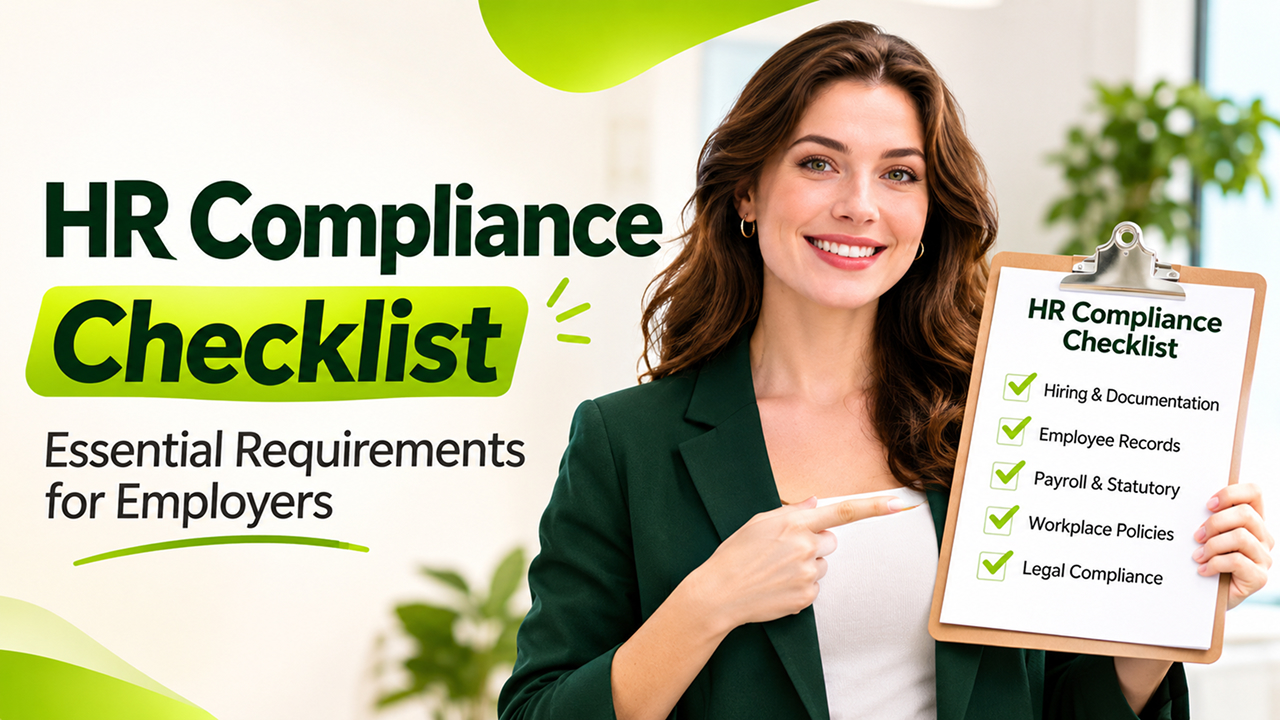
An effective HR compliance checklist helps employers keep track of essential workplace responsibilities and avoid overlooking important legal obligations. From hiring and payroll management to employee records and workplace safety, each area requires proper documentation, regular monitoring, and timely action to maintain compliance with applicable employment laws.
1. Recruitment and Employment Documentation
Compliance starts before an employee joins the organization. Recruitment procedures should follow applicable equal employment opportunity and anti-discrimination requirements.
Employers should ensure that job descriptions accurately communicate responsibilities and that candidate selection follows fair, consistent criteria.
Once a candidate is selected, the organization should prepare and maintain relevant employment documentation.
Important documents include:
- Signed employment agreements or appointment letters.
- Job descriptions and role responsibilities.
- Identity and eligibility verification records, where legally required.
- Confidentiality agreements, where applicable.
- Employee handbook acknowledgments.
Employment agreements should clearly explain compensation, working hours, responsibilities, leave entitlements, and termination conditions in accordance with local law.
2. Employee Classification and Working Hours

Correct employee classification is an important part of employment law compliance. Businesses must distinguish between employees, independent contractors, temporary workers, and other legally recognized working arrangements. Misclassifying a worker can affect minimum wage, overtime payments, benefits, tax obligations, and other employment protections. Maintaining accurate employee records and employment details helps organizations support consistent HR administration and compliance.
Employers should also maintain reliable attendance and working-hour records. These records help HR teams verify scheduled hours, overtime, leave balances, and payroll calculations.
3. Payroll, Wages, and Statutory Deductions

Payroll compliance requires employers to calculate and distribute employee compensation accurately and on time. A reliable payroll process should account for basic salary, overtime, bonuses, approved deductions, and applicable statutory contributions.
Employers should regularly verify:
- Salary calculations against employment agreements.
- Minimum wage and overtime requirements.
- Tax deductions and applicable social security contributions.
- Timely salary payments and payslip distribution.
- Payroll records and supporting financial documents.
These checks form an important part of HR compliance management because even small payroll errors can create employee disputes and reporting issues.
4. Workplace Safety and Employee Welfare

Employers are responsible for providing a workplace that meets applicable health and safety standards. These responsibilities apply to physical offices, factories, warehouses, and other regulated work environments. Organizations should establish clear safety procedures and communicate them to employees.
An effective workplace safety process includes:
- Documented health and safety policies.
- Emergency evacuation procedures.
- Appropriate safety equipment and training.
- Accident and incident reporting.
- Regular workplace risk assessments.
The International Labour Organization also emphasizes employee participation, safety information, and training as important elements of an effective occupational safety and health management system.
5. Anti-Discrimination and Harassment Prevention
A compliant workplace should provide fair employment opportunities and protect employees from unlawful discrimination, harassment, and retaliation. Employers should establish policies explaining acceptable workplace behavior, reporting procedures, investigation responsibilities, and disciplinary measures.
6. Employee Leave and Benefits
Leave administration is another area that requires consistent documentation and accurate policy implementation. Depending on applicable employment laws, employees may be entitled to annual leave, sick leave, maternity benefits, public holidays, and other statutory benefits.
Employers should maintain an updated leave policy explaining eligibility, application procedures, approval processes, and leave balances.
The employee compliance checklist should also include periodic reviews of benefit eligibility and required contributions.
For instance, when an employee requests maternity leave, HR should verify eligibility, explain available entitlements, and ensure that the required documentation and payments are handled correctly.
7. Employee Records and Data Protection
HR departments collect and manage sensitive information throughout the employment relationship. This may include identity documents, addresses, bank details, tax records, emergency contacts, performance reviews, and signed agreements. Organizations should implement strong employee data security measures to restrict unauthorized access and protect confidential employee information.
Poor record management can lead to inaccurate reporting, unauthorized access, and difficulties during audits.
Employers should:
- Maintain complete and updated employee files.
- Restrict access to confidential HR information.
- Store digital and physical documents securely.
- Follow applicable data retention and deletion requirements.
- Maintain records of attendance, wages, overtime, and leave.
A structured document management system can make retrieving employee records easier while supporting consistent HR compliance requirements.
8. Employee Training and Workplace Policies
Policies are useful only when employees understand them and know how to follow them.
Employers should maintain an employee handbook covering workplace expectations, attendance, leave, confidentiality, acceptable conduct, disciplinary procedures, and grievance reporting.
HR teams should also organize training when employees join or when important workplace policies change.
Training records, employee acknowledgments, and policy revision dates should be maintained as evidence that the organization has communicated its expectations.
9. Employee Termination and Offboarding
Compliance responsibilities do not end when an employee resigns or leaves the organization.
Employers should follow applicable termination procedures, notice requirements, final payment rules, and benefit settlement obligations.
An offboarding process should cover:
- Written resignation or termination documentation.
- Notice period and applicable payments.
- Final salary and outstanding reimbursements.
- Return of company property.
- Revocation of system and application access.
- Issuance of required employment documents.
A consistent exit process protects both the organization and the departing employee while ensuring that employment records remain complete.
How to Improve HR Compliance Management
Maintaining compliance across multiple departments becomes difficult when information is scattered across spreadsheets, emails, paper files, and disconnected applications.
Organizations can make the process more manageable by introducing a consistent review system.
1. Centralize Employee Documentation
Keep employment agreements, identification records, payroll information, and policy acknowledgments in an organized system.
2. Assign Clear Responsibilities
Define which HR, finance, legal, and management team members are responsible for individual compliance activities.
3. Review Policies Regularly
Check whether existing policies still reflect current employment regulations and organizational practices.
4. Track Important Deadlines
Maintain reminders for payroll submissions, statutory payments, licence renewals, training, and required filings.
5. Conduct Periodic Internal Audits
Compare actual HR practices against documented obligations to identify missing records, outdated policies, and procedural gaps.
Businesses operating in India should also review the applicable statutory compliance requirements under the four Labour Codes, effective from November 21, 2025, alongside relevant central and state rules and notifications.
Conclusion
Maintaining HR compliance requires employers to regularly review their hiring practices, payroll processes, employee records, and workplace policies. A consistent approach helps businesses address regulatory changes, prevent documentation gaps, and manage employee-related responsibilities more effectively. By following a well-organized HR compliance checklist, organizations can stay on top of essential obligations, reduce compliance risks, and create a fair and well-managed workplace.
Frequently Asked Questions
What is an HR compliance checklist?
An HR compliance checklist is a structured document that helps employers verify whether their HR practices meet applicable employment laws and workplace regulations.
Why are HR compliance requirements important for employers?
HR compliance requirements help businesses protect employee rights, maintain accurate records, and reduce the risk of legal disputes and regulatory penalties. They also encourage consistent workplace practices and make it easier for organizations to prepare for internal and external audits.
What documents should be included in an employee compliance checklist?
Important documents include employment agreements, identification and verification records where required, payroll statements, attendance registers, leave records, tax documents, training acknowledgments, and termination records.
How often should employers review their HR compliance checklist?
Employers should review their checklist regularly, preferably through monthly operational checks and more comprehensive periodic audits. They should also update it whenever employment regulations change, new employees join, workplace policies are revised, or organizational operations expand.
How can technology improve HR compliance management?
HR technology can help organizations organize employee records, automate payroll calculations, track attendance, manage leave requests, and monitor important deadlines. Centralized HR systems also make it easier for authorized personnel to retrieve documents and maintain consistent administrative processes.