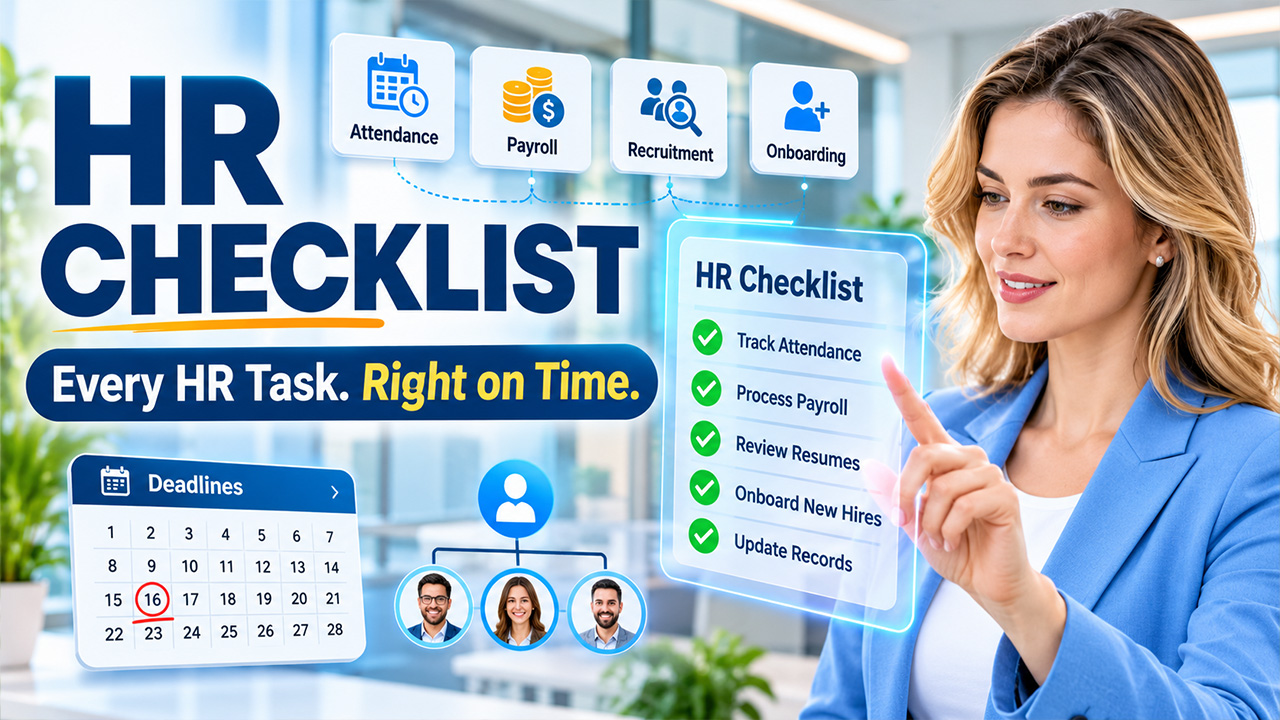

An employee joins, someone requests leave, payroll approaches, and another team member needs an updated employment document. These activities may seem routine, but managing them without a consistent process can create unnecessary administrative work.
An effective HR checklist gives every recurring responsibility a defined sequence, deadline, and owner. Instead of relying on memory or scattered reminders, HR professionals can follow a documented process and confirm that important activities are completed.
The objective is not to turn every HR responsibility into paperwork. It is to create a practical system that keeps everyday operations organized while allowing the HR team to focus on employees and business priorities.
Why Recurring HR Processes Need a Defined Checklist
Many HR responsibilities repeat daily, weekly, monthly, or annually. However, repetition does not automatically make them consistent. Using standardized HR workflows helps organizations establish repeatable procedures, assign responsibilities, and reduce inconsistencies across recurring HR activities.
For example, two HR executives might follow different steps when processing employee leave requests. One may update the attendance record immediately, while another waits until the end of the month. This creates discrepancies that can affect payroll and employee records.
A structured HR checklist addresses these gaps by establishing common expectations.
Key benefits include:
Better Accountability
Every activity has an assigned person responsible for completion.
Fewer Missed Deadlines
Important activities become easier to track.
Consistent Execution
Employees receive a more predictable HR experience.
Improved Documentation
Completed activities can be supported by appropriate records.
Easier Delegation
New HR team members can understand established procedures.
Greater Visibility
Managers can identify pending tasks and recurring bottlenecks.
A well-maintained HR checklist also helps businesses standardize their operations when teams expand across departments or geographical locations.
How to Build an HR Checklist That Works
Creating a useful checklist requires more than writing down administrative responsibilities. Each activity should connect to an actual business process.
1. Identify Processes That Repeat
Start by reviewing the activities your HR department handles regularly.
Divide them into categories such as:
- Recruitment and candidate management
- Employee onboarding and offboarding
- Attendance and leave management
- Payroll and compensation
- Employee performance management
- Training and development
- Employee documentation
- Workplace policies and compliance
Next, identify how frequently each activity occurs.
For example, reviewing attendance may happen every working day, while reviewing employee documentation may be scheduled monthly or quarterly.
This initial assessment helps determine which activities deserve a place in the HR checklist and which are occasional responsibilities.
2. Assign a Frequency to Every Activity
The next step is to organize responsibilities according to their actual deadlines.
| Frequency | Typical HR Responsibilities |
| Daily | Attendance monitoring, employee queries, leave requests |
| Weekly | Recruitment updates, pending approvals, onboarding progress |
| Monthly | Payroll preparation, attendance reconciliation, HR reporting |
| Quarterly | Performance discussions, training reviews, policy checks |
| Annually | Handbook reviews, workforce planning, compliance assessments |
These are suggested operating intervals, not universal legal deadlines. Adjust them according to your organization’s payroll cycle, workforce structure, and applicable statutory compliance requirements.
A frequency-based HR checklist makes it easier to distribute work instead of allowing everything to accumulate at month-end.
3. Define the Owner and Completion Criteria
Every checklist item needs a responsible person.
However, assigning an owner alone is insufficient. The team must understand what successful completion looks like.
Consider an employee onboarding activity.
Instead of writing:
Complete onboarding.
Break it into measurable actions:
- Collect the required employee information.
- Verify submitted documents.
- Prepare employment-related paperwork.
- Arrange system and workplace access.
- Communicate joining information.
- Confirm completion of the induction process.
This creates a more actionable HR process checklist.
It also establishes clear handover points when multiple people participate in the same human resources workflow.
4. Include Evidence and Follow-Up Actions
A completed checkbox does not always prove that a process was handled correctly.
For important activities, record supporting information such as:
- Completion date
- Responsible employee
- Approval status
- Relevant document or record
- Pending action, if any
- Final verification
For example, payroll preparation should include a review of attendance inputs, approved leave, compensation changes, deductions, and authorization before processing.
The U.S. Department of Labor explains that covered employers must maintain accurate wage and working-hour records under applicable Fair Labor Standards Act requirements. See its recordkeeping and reporting requirements.
A Practical HR Checklist for Daily and Monthly Operations
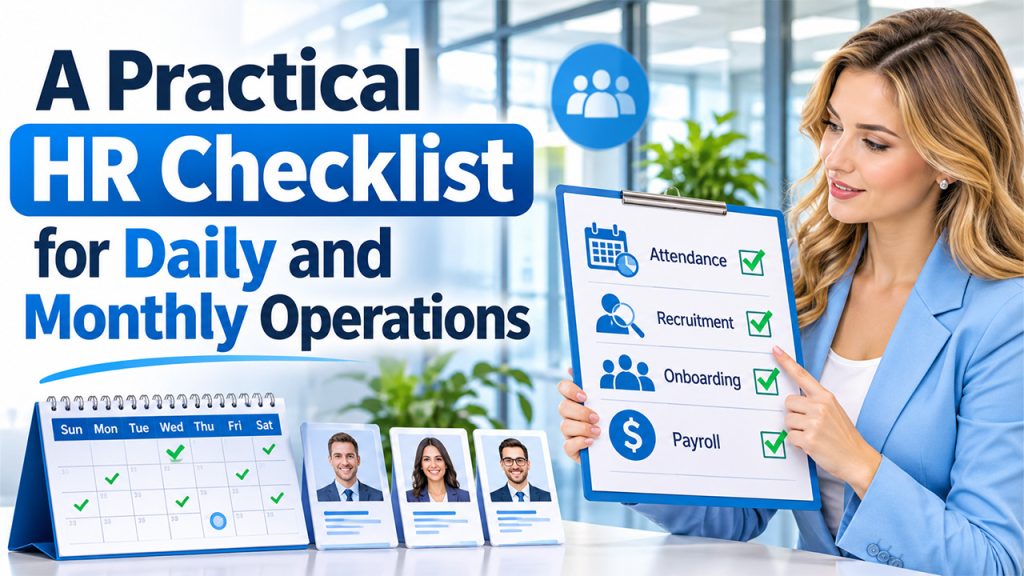
Once the structure is ready, create separate working lists for different frequencies.
Daily HR Tasks
An effective daily HR checklist can include:
- Review attendance exceptions and missing punches.
- Check incoming employee requests and HR queries.
- Process leave applications and pending approvals.
- Monitor new candidate applications and interview schedules.
- Follow up on urgent onboarding requirements.
- Update employee information when changes are approved.
These HR daily tasks help prevent small administrative issues from becoming larger operational problems.
Weekly Responsibilities
Weekly reviews should focus on progress and pending work.
- Review recruitment pipeline status.
- Check onboarding progress for upcoming employees.
- Follow up on outstanding employee documents.
- Review unresolved HR requests.
- Coordinate with department managers about workforce requirements.
Monthly HR Checklist
Monthly activities generally require more coordination because they involve information collected throughout the previous weeks.
A useful HR monthly checklist should cover:
- Reconcile attendance and approved leave records.
- Verify payroll inputs and employee changes.
- Review salary adjustments and approved deductions.
- Check employee database accuracy.
- Prepare workforce and recruitment reports.
- Review unresolved employee concerns.
- Check upcoming contract, training, and policy deadlines.
For businesses operating in Australia, for example, the Fair Work Ombudsman explains that employers must maintain specified employee time and wage records for seven years. Its record-keeping guidance provides further details. Its document management and record retention practices guidance provides further details.
Companies operating in the USA, Pakistan, India, and Australia should maintain separate compliance requirements for each applicable jurisdiction rather than assuming one checklist satisfies every country’s employment laws.
Benefits and Challenges of Maintaining an HR Checklist
A consistent HR checklist improves operational visibility, but implementation also requires some planning.
Benefits
- Reduces dependence on individual memory.
- Makes recurring work easier to delegate.
- Improves coordination between HR, finance, and department managers.
- Helps identify incomplete activities before deadlines.
- Creates a documented history of important HR actions.
Challenges
- An overly detailed checklist can become difficult to maintain.
- Outdated procedures may continue being followed without regular reviews.
- Unclear ownership can create duplicate work.
- Manual tracking becomes harder as employee numbers increase.
- Sensitive employee information requires appropriate access controls.
The solution is to keep each list focused. Include only the actions necessary to complete and verify a process.
Tips for Making Your HR Process Checklist Easier to Maintain
A checklist should support the team rather than become another administrative burden.
Consider these practical recommendations:
Use Action-based Language
Write “Verify attendance corrections” instead of “Attendance.”
Set Realistic Deadlines
Align activities with actual payroll dates, joining schedules, and review cycles.
Separate Routine Work from Exceptions
Unusual employee situations may require individual assessment rather than a standard procedure.
Review the Process Regularly
Update responsibilities when policies, organizational structures, or applicable regulations change.
Limit Unnecessary Access
Restrict sensitive employee and payroll information to authorized personnel.
Use workflow automation where appropriate: Repetitive approvals, notifications, and task assignments can be managed through structured systems. HRCRM provides HR workflow management for businesses looking to organize recurring HR operations.
How HR Technology Can Support Recurring Processes
Spreadsheets and shared documents can work for smaller teams. However, maintaining several disconnected lists often creates duplicate entries, delayed updates, and limited visibility.
An HR management platform can bring related activities together.
For example, payroll preparation can be connected with attendance information, while onboarding activities can follow a defined sequence of document collection and approvals.
HRCRM provides dedicated capabilities for payroll management and employee onboarding, helping organizations manage important stages of their employee operations.
Technology should complement a clearly designed process, not replace the need for responsible owners and appropriate HR decisions.
Conclusion
Recurring HR activities become easier to manage when responsibilities are clearly documented and consistently reviewed. A practical HR checklist creates a common working method, clarifies ownership, and helps teams identify incomplete tasks before they affect other operations.
Start with the activities your department performs most frequently. Assign realistic deadlines, define completion requirements, and review the process as your workforce changes.
As operations grow, consider using HRCRM to support connected HR workflows, payroll, and employee management. The goal is simple: build processes that remain organized even when the people responsible for carrying them out change.
Frequently Asked Questions
What should an HR checklist include?
It should include recurring responsibilities related to recruitment, onboarding, attendance, payroll, employee records, performance management, training, and compliance. Each activity should have an owner, deadline, and completion requirement.
How often should an HR checklist be updated?
Review it whenever an important process or policy changes. A quarterly review is a practical starting point for checking whether responsibilities, deadlines, and ownership remain accurate.
What is the difference between a daily and monthly HR checklist?
A daily list covers operational activities such as attendance, employee requests, and recruitment follow-ups. A monthly list focuses on payroll preparation, record reconciliation, reporting, and scheduled reviews.
Can small businesses use an HR process checklist?
Yes. Small businesses can begin with a spreadsheet or shared document. As responsibilities increase, they can move to a dedicated HR management system.
Can HR software automate recurring checklist activities?
Depending on the platform, HR software can support task assignments, approval workflows, reminders, employee records, and reporting. Businesses should evaluate available functionality before selecting a solution.