


You’ve decided to quit. Now you’re looking at a blank page and wondering how formal you should be. Most people get stuck here. However, the right resignation letter format for employees is actually very straightforward. All you need to do is clearly state that you are leaving your job and when you will be leaving. You don’t need to use complicated language or write a lengthy letter. In this post, you will learn what a resignation letter is, how to structure it, and what a great resignation letter format for employee should look like. We will also include an example to help you tailor your letter. Everything fits onto one page so it’s not as overwhelming as it looks.
What a resignation letter means and why it matters
A resignation letter is a formal letter informing your manager or HR that you are leaving your job. It will state your last working day. Whilst some refer to this as a resign letter, it is the same thing. You should always inform your manager verbally, however this letter will serve as proof. It provides your manager with the information first and then provides evidence for HR and Payroll to take action.
Having this letter means there will be no confusion when it comes to remembering details. It will be added to your personnel file by HR. This will confirm your start date of your notice period and your last day. This will determine what your final payment, holiday entitlement and benefits will be. It will also provide your team with time to plan for your replacement. Without having a resignation letter, there may be confusion over what your last day was. Having a written record will protect you and your employer in the event of any confusion. A well written and polite letter can be important if you are ever asked for a reference in the future.
The standard resignation letter format for an employee
At the very top, put today’s date – then your contact details (if they’re relevant) below it. Next, provide the name and title of your manager. Don’t use “To Whom It May Concern” – having the name on the envelope gives a sense of who got the notice and shows your employer you’ve made an effort.
Your resignation letter format for employee needs to contain all your key points – when you’re resigning, and what your last working day will be. Make sure you include the date too – it might seem obvious, but including the day, month and year means there’s no confusion later. Aim to say this in either your first or second sentence.
Avoid using words like ‘I regret to inform you’ – this sounds over-dramatic. The final section – although entirely optional – is where you can mention why you’re quitting. Again, keep things neutral by talking about your new job or personal reasons. This isn’t a forum for explaining your situation in detail to your current employer.
Say thanks and offer to help you with the handover – even if that’s just taking time over documentation of what you did, training someone else to do the work or offering to give them some guidance on how best to carry out certain things. If they were part of a particular project, talk about the things they might have enjoyed working on or look to provide support around those areas.
Then close simply at the end with ‘Sincerely’ (or whatever works) and your name. You could sign your name manually on top of the printed copy and make sure the name, date and spelling looks good first. This resignation letter format for employee should be only 1 page long and written in a plain font, with short paragraphs.
What makes the best resignation letter
Write your letter with the intention of working with them again. As careers can be long and many industries are niche, you are likely to cross paths again with people you’ve worked with before. Your line manager could be a great reference, client or future boss.
Don’t include any negative comments about your manager, team or company. Don’t compare your current company to your new employer. Don’t mention your salary or what your new role pays. Avoid anything you wouldn’t want to be read out in an HR meeting. Don’t include any anger or pride in your letter. It’s normal to feel strongly about leaving your job so write a draft and then leave it for a day. Employees can maintain a professional tone in workplace communication by following effective business communication practices, especially when writing sensitive or formal messages.
Don’t send your letter until your new job has completed their background check. Don’t use your letter to negotiate a better offer from your current employer. A resignation letter shows that you’ve made a final decision so only write it once you’re ready to.
The best resignation letter is a boring one. Keep it simple, polite and correct. The less attention you draw to your letter the better.
Resignation letter sample and a short version
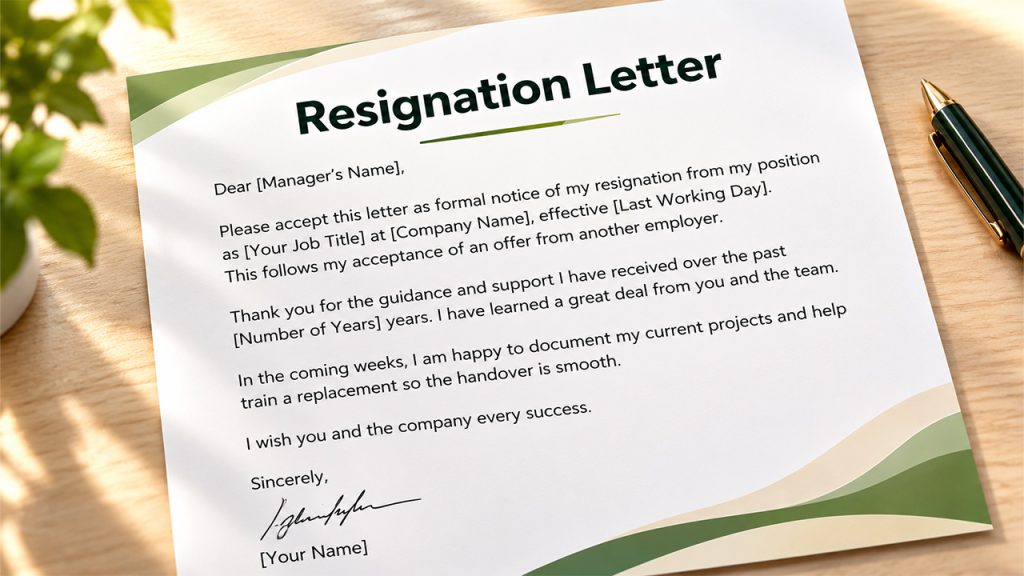
Below are two drafts that you can paste into your document and trim or add more details, with brackets where your details go. The first is the full version, and the second is a short resignation letter.
Full version
Short Version
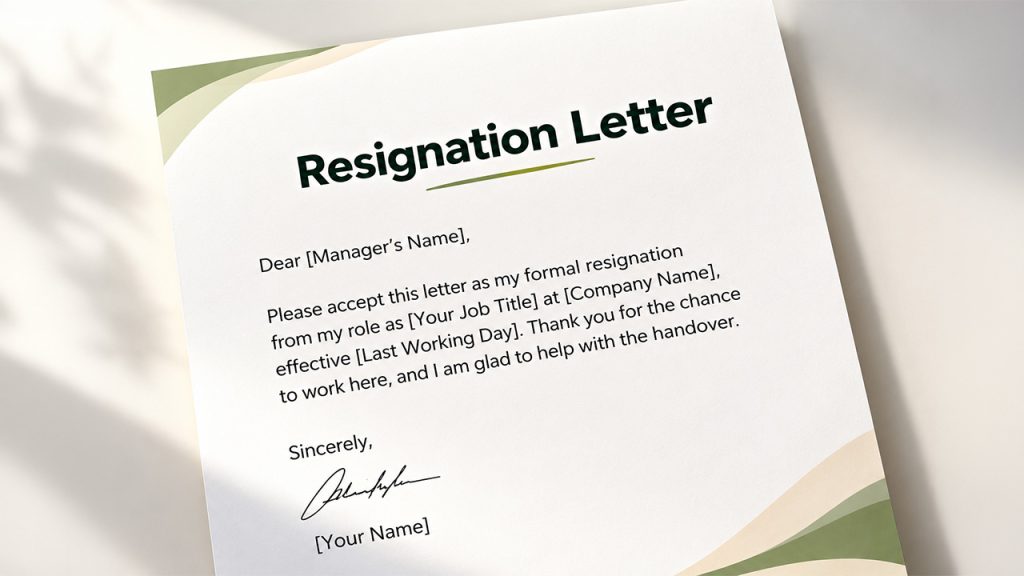
The short version can be used for most voluntary exits and junior roles. The long version should be used for senior and long-serving employees. Senior roles will have more to hand over and long serving employees will need a longer thank you message. Both versions include the key points of you leaving and your final day. Remove any lines that do not apply to you and replace the details in the brackets with your own.
Conclusion
A good structure for a resignation letter is to clearly state you are resigning, state your final working day after checking your remaining leave balance, thank them briefly and then end politely. Each section should only have one purpose and only be a line or two long. As it is a short letter that will only serve one purpose, you don’t want to make it any longer. This could cause issues and won’t provide any new information. By leaving on good terms you are protecting the reputation you have created and relationships you have made. Simply follow the resignation letter format for employee above, add your details and send it off.
Frequently Asked Questions
What is the resignation letter format for employee?
Date, manager's name, clear resignation statement with last working day, brief thanks, and signature.
What should the best resignation letter format for employee include?
Your resignation, last working day, short thank you, and offer to help with handover.
Is a resign letter different from a resignation letter?
No, both are the same formal notice that you are leaving your job.
When should I use a short resignation letter?
Use it for a quick, factual exit, especially in junior or short-tenure roles.
Do I need to mention why I am leaving?
No, it's optional; keep it neutral if you mention it at all.