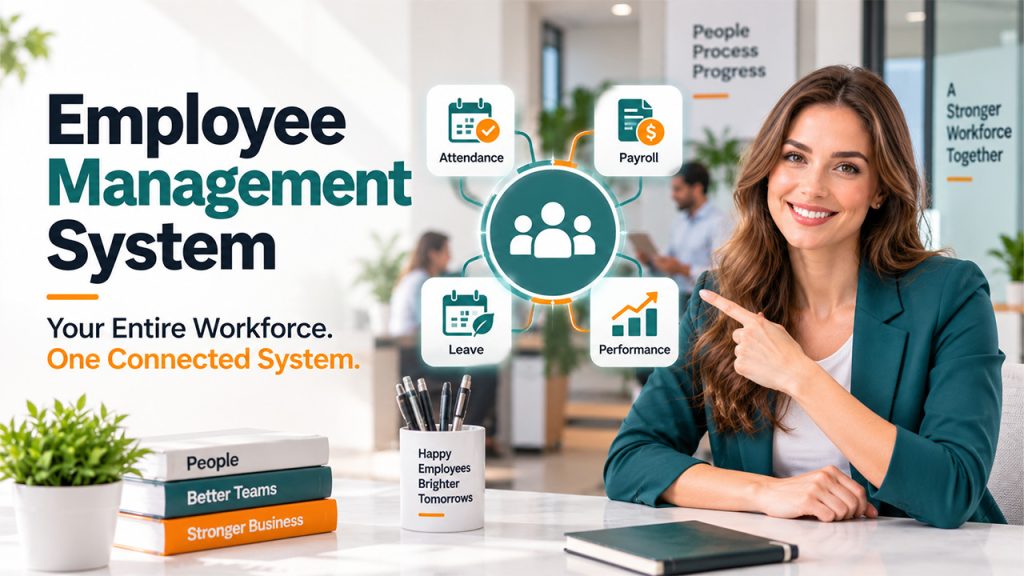

The guide explores what employee attendance management is, why it matters for businesses, its key benefits, and common challenges. It also explores how an employee attendance management system can help organizations manage their workforce more effectively.
In the rapidly digitalizing modern workspace, managing employee attendance is an essential part of running a productive and organized workplace. Whether the user manages a small business or a large enterprise, knowing when employees work, arrive, leave, take break, or are absent helps HR teams maintain accurate records and make a better workforce decision.
However, the traditional methods of managing employee attendance, such as spreadsheets, paper registers, and manual timesheets, can be time-consuming and prone to errors. This is why organizations are adopting modern technology-driven employee attendance management solutions to simplify the processes, improve accuracy, and support better workforce planning.
What is Employee Attendance Management?
Employee attendance management is the process of recording, monitoring, and managing employees’ attendance and working hours within an organization. The process helps organizations keep an accurate record of when an employee starts and finishes work, takes breaks, arrives late, leaves early, works overtime, and takes time off.
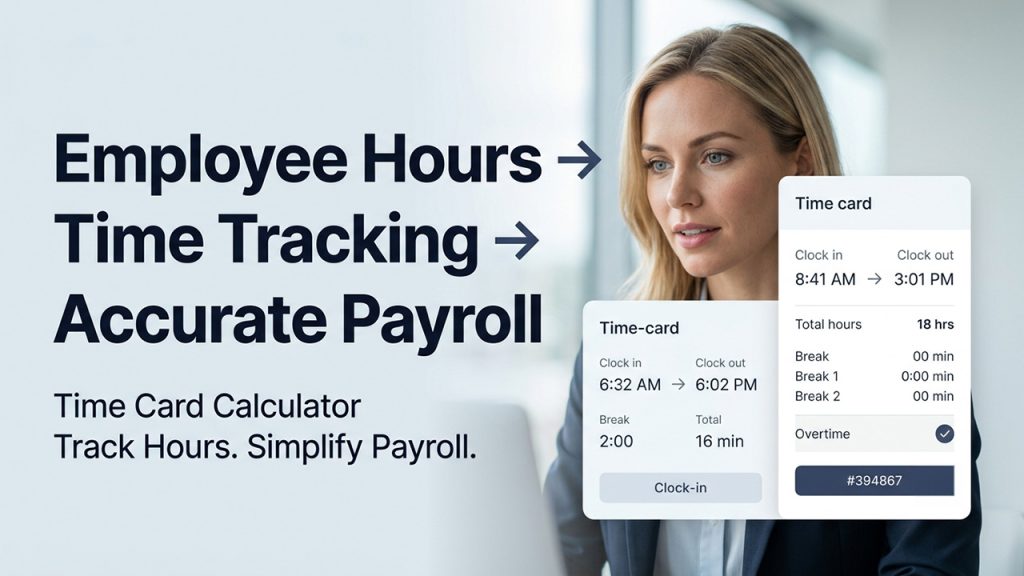
Traditionally, businesses manage attendance using paper, registers, spreadsheets, or manual timesheets. But currently, many organizations are utilizing an employee attendance management system to automate all these tasks and reduce errors.
A typical attendance management process includes check-in and check-out tracking, working hours calculation, absence and leave tracking, late and early departure monitoring, overtime tracking, attendance reporting, and payroll support.
Importance of Employee Attendance Management
For an organization, the attendance of the employee has a direct impact on the overall productivity and operational efficiency. Inaccurate time records, unexplained absences, or frequent absenteeism can make it difficult for managers to plan workloads and maintain adequate staffing. A structured employee attendance management process allows organizations to easily identify attendance trends and address issues before they affect the performance of an organization.
Some of the key benefits of employee attendance management are as follows:
Improves Employee Productivity:
Regular monitoring of attendance patterns enables managers to identify frequent absenteeism, late arrivals, or early departures, and take appropriate action.
Ensure Accurate Payroll:
An employee attendance management system can automatically record working hours and provide accurate data for Payroll Management, reducing calculation errors and disputes.
Reduces Manual Work:
The automated system reduces repetitive administrative tasks by automatically recording attendance, calculating hours, and generating reports.
Supports Better Workforce Planning:
Accurate attendance data helps managers understand staffing requirements and adjust schedules and allocate resources accordingly.
Common Challenges in Managing Employee Attendance
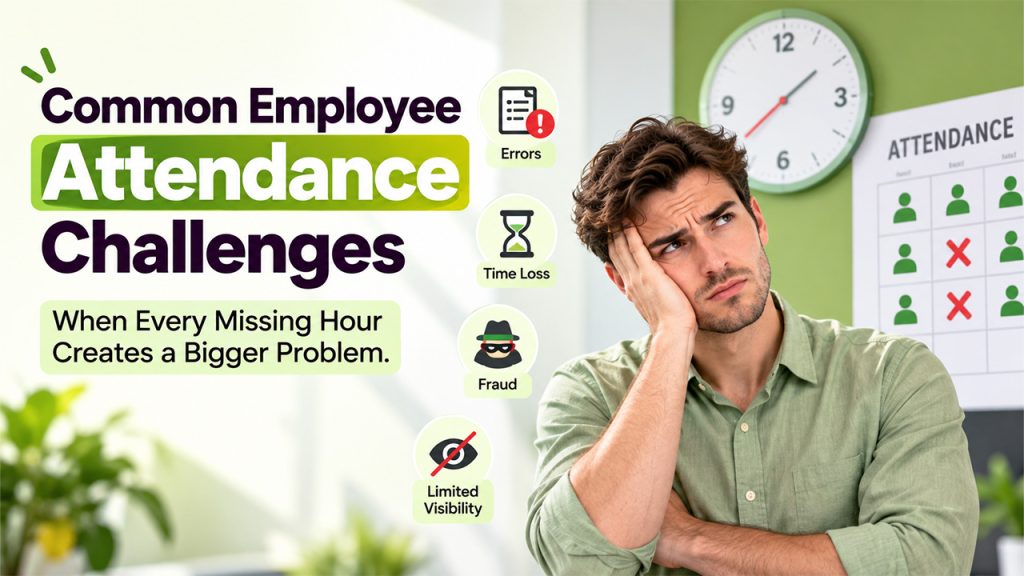
Businesses that rely on manual attendance processes often encounter several challenges, such as:
Manual Errors:
Entering attendance data manually can lead to incorrect working hours, missed entries, duplicate records, or calculation of mistakes.
Time-Consuming Processes:
For an organization, collecting attendance information, checking records, calculating working hours, and preparing reports can take many hours.
Attendance Fraud:
Practices such as buddy punching or back-date entry can affect payroll accuracy and productivity.
Limited Visibility:
Manual processes rarely offer real-time insights, leaving managers unknown about attendance problems until the end of a pay period.
What Is an Employee Attendance Management System?
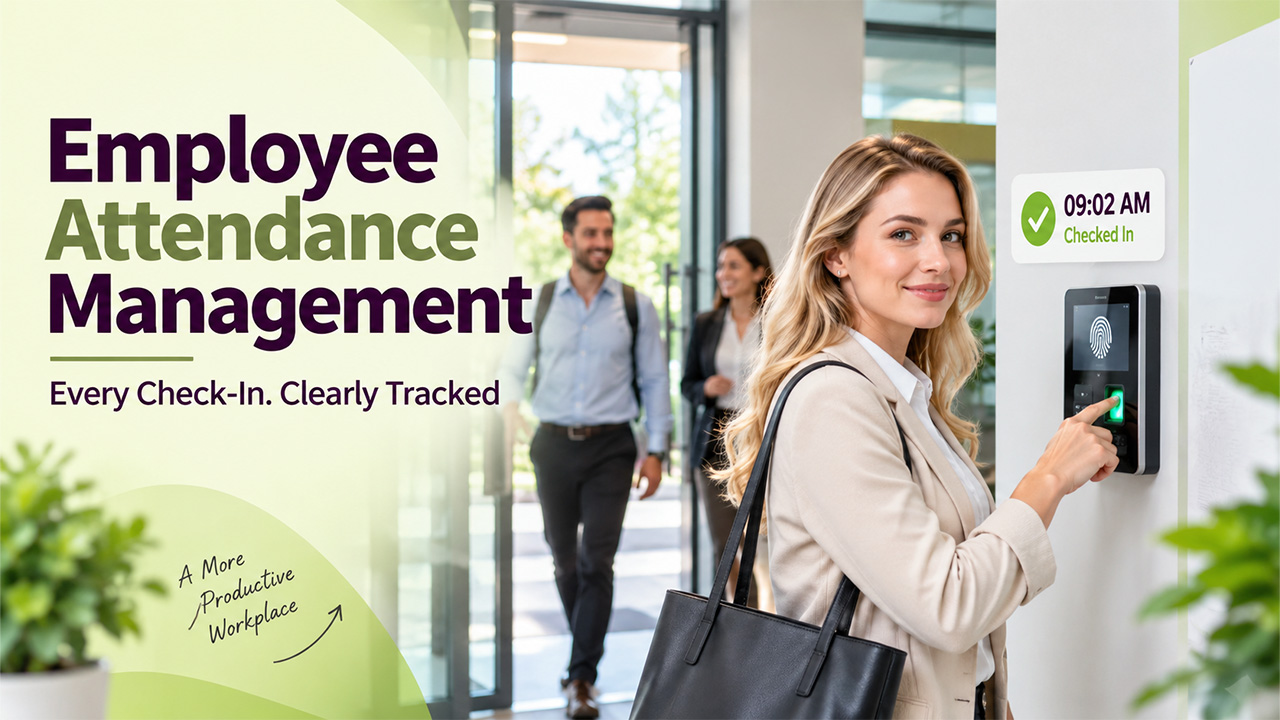
An employee attendance management system is a software solution that automates the entire process of recording, monitoring, and analyzing employee attendance. These systems may use different attendance methods, which include biometric devices, RFID cards, mobile applications, web-based check-ins, or other digital methods to record attendance.
The typical system can automatically capture attendance information and offer HR teams and managers centralized access to employee records through an Employee Database. Through the system, businesses can manage attendance data through a single platform, instead of maintaining multiple spreadsheets.
Key Features of an Attendance Management System
The modern attendance management system offers a wide range of features designed to simplify workforce administration, such as:
Automated Attendance Tracking
The system eliminates manual work involved in recording employee presence. It can also capture check-in and check-out information and automatically calculate working hours based on predefined rules.
Real-Time Attendance Data
Managers can view attendance information in real time, making it easier to identify missing employees, late arrivals, or staffing gaps.
Leave Management
An efficient system can connect attendance records with approved leave, enabling HR teams to maintain accurate employee records.
Overtime Tracking
Employees who work beyond their scheduled hours can also be identified automatically. It makes it easier to calculate overtime and maintain accurate payroll information.
Benefits of Employee Attendance Management System

Implementing an effective employee attendance tracking system can offer key benefits to both businesses and employees.
Some of the key benefits of employee attendance tracking are as follows:
Improve Accuracy:
The system reduces the risk of manual data-entry errors and calculation mistakes.
Increased Productivity:
The system provides greater visibility into attendance, enabling organizations to identify recurring issues and take appropriate action.
Better Payroll Accuracy:
The attendance records often influence salary calculations, overtime, deductions, and paid leaves.
Reduced Administrative Work:
The system helps HR teams by allowing software to perform many routine tasks automatically, instead of manually compiling attendance sheets.
Greater Transparency:
With the system, employees have clearer visibility in their attendance, working hours, leave, and overtime records.
Choosing the Right Employee Attendance Tracking System
Choosing the right employee attendance management system is essential for businesses, as it helps reduce manual work and maintain accurate employee records. With many solutions available, businesses should look beyond basic check-in and check-out features and choose a system that fits their workforce, work environment, and long-term needs.
Some key factors to consider while choosing the right employee attendance management system are as follows:
Consider Business Requirements:
Organizations should start by identifying how the organization currently manages attendance and what problems they want to solve. Businesses should consider factors such as the number of employees, multiple locations, shift schedules, remote workers, overtime, and leave policies.
Look for Easy Employee Attendance Tracking:
The organization should consider an employee attendance tracking system that makes it simple for both employees and HR teams. The goal should be to make attendance recording convenient without compromising accuracy.
Ensure Payroll Integration:
Attendance data can directly affect salary calculations, overtime, deductions, and paid leave. Organizations should choose an employee attendance management system that integrates with payroll software and reduces duplicate data entry.
Conclusion
Effective employee attendance management is essential for the organization to maintain productivity, payroll accuracy, workforce visibility, and operational efficiency. The employee attendance management system can automate attendance recording, simplify employee attendance tracking, and support the payroll process. It also helps manage leave and overtime and offers valuable workforce insights. For an organization, the right tracking system should be easy to use, scalable, secure, and compatible with the way the organization operates.
Ultimately, successful attendance management is about creating an accurate, transparent, and efficient process that benefits HR teams, managers, employees, and the business as a whole.
Frequently Asked Questions
Why is employee attendance management important for businesses?
An employee attendance management system is important for businesses because it helps maintain accurate time records, improve workforce visibility, support payroll accuracy, identify attendance issues, and make better staffing and workforce planning decisions.
How does employee attendance tracking improve productivity?
Employee attendance tracking helps improve productivity as it enables managers to identify patterns such as frequent absenteeism, late arrivals, early departures, and overtime.
How does attendance management improve payroll accuracy?
An attendance management system improves payroll accuracy by automatically recording working hours, overtime, absences, and other relevant attendance information.
Can an attendance management system track overtime?
Yes, an attendance management system can track overtime. Many attendance management systems can identify working hours beyond scheduled shifts and maintain overtime records.